
Kristian Blak & Yggdrasil
Risastova
Tutl (www.tutl.com)
Danish pianist-composer-producer Kristian Blak has been integral to propagating and promoting music made in the Faroes Islands since founding Yggdrasil in 1980. The Norse "World Tree" of destiny, Yggdrasil is a powerful mythological ash whose three roots reach into the underworld, devoured by serpents even as the tree reaches for heaven, while at its pinnacle sits a watchful eagle. Yggdrasil brings a contemporary jazz-classical-rock sensibility to an original repertoire inspired by traditional island dances, ballads, children's rhymes, chants, hymns, and poetry. Guitarist-singer-composer Kári Sverrisson, a startling vocalist, shares writing duties with Blak, a nimble pianist, on Risastova ("Giant's House," the name of an imposing Faroe Islands rock formation). Rounding out the octet are saxophones, violin, cello, electric guitar, bass, drums, and percussion. The music is as craggy, windswept, overcast, brooding, remote, and unforgiving as the Faroes of its origin. The closing piece, "Vágatunnilin," a moody Blak suite in five parts, was initially performed at 100 meters below sea level, to commemorate the opening of the first underwater tunnel in the Faroes, plumbing the roots of Yggdrasil itself. - Michael Stone
CD available from cdRoots
Wednesday, March 12, 2008


Wednesday, February 27, 2008
Tarantolati di Tricarico: a primal, visceral musical experience
I Tarantolati di Tricarico
U'Squatasce
CNI (www.cnimusic.it)
This dynamic band has been a driving force in Southern Italian culture, interpreting and performing their music with an incredible dynamism. There is no shortage of groups resuscitating the ancient music of tarantism in the South of Italy these days, but I Tarantolati di Tricarico have been involved in this endeavor since the 1960's (the band's biography indicates that they were officially 'born' in 1975. This was the time of the first wave of the Southern Italian folk revival, a time when the music of the pizzica was, in the words of the historian Luigi Chiriatii, a "broken memory": painful to listen to, as many people emigrated from Southern Italy to escape the poverty and hardship of the land. Performing the ritual music and old folk songs was a political act, a way of giving voice to expressions experienced and felt but oppressed in the modern age.
I Tarantolati di Tricarico's latest CD is a writhing, unusual beast; the cover art depicts a be-ribboned person in the throes of ecstasy, a tarantula dead center on the belly, surrounded by a psychedelic swirl of color. Those 'bitten' by the spider were thought to be drawn to particular sounds, and to respond to various colored ribbons; the remedy was to dance the poison out. What grabs the listener immediately upon listening to the first tracks is the vigor with which the songs are performed, a rigorous rhythmic attack full of tambourines and the thudding percussion of cupa-cupa tubs. But the real surprise occurs starting on the fourth track, "Hatta Mammone," where the acoustic sound of the band suddenly incorporates elements of electronic techno and vocals reach a trance-inducing intensity heightened by all kinds of hand percussion. For a band that has existed for several decades, it becomes abundantly clear that experimentation is the order of the day. The entire CD never lets up for a moment; tunes such as "Bella Figljóla" pulsate passionately, urgently contemporizing the music. Witness the stunning "Uno: Monte La Lune," which features more chanting, a heavy, insistent beat, and a piano line that nods briefly towards salsa as the bass bounces across the soundscape.
The great researcher of tarantism in Southern Italy, Ernesto De Martino, argued in his famed ethnographic work "The Land of Remorse" that the tarantism ritual had ancient Greek roots; the connection between tarantism and the rituals of Dionysus has been explored and contested in academic circles for some time. However, the music of I Tarantolati di Tricarico certainly goes in for the frenzy of Dionysus. U'Squatasce is a primal, visceral experience, a wondrous addition to the ever-evolving dance of the spider. - Lee Blackstone
Listen:
CD available from cdRoots
The ensemble's web site: www.tarantolatiditricarico.org
U'Squatasce
CNI (www.cnimusic.it)
This dynamic band has been a driving force in Southern Italian culture, interpreting and performing their music with an incredible dynamism. There is no shortage of groups resuscitating the ancient music of tarantism in the South of Italy these days, but I Tarantolati di Tricarico have been involved in this endeavor since the 1960's (the band's biography indicates that they were officially 'born' in 1975. This was the time of the first wave of the Southern Italian folk revival, a time when the music of the pizzica was, in the words of the historian Luigi Chiriatii, a "broken memory": painful to listen to, as many people emigrated from Southern Italy to escape the poverty and hardship of the land. Performing the ritual music and old folk songs was a political act, a way of giving voice to expressions experienced and felt but oppressed in the modern age.
I Tarantolati di Tricarico's latest CD is a writhing, unusual beast; the cover art depicts a be-ribboned person in the throes of ecstasy, a tarantula dead center on the belly, surrounded by a psychedelic swirl of color. Those 'bitten' by the spider were thought to be drawn to particular sounds, and to respond to various colored ribbons; the remedy was to dance the poison out. What grabs the listener immediately upon listening to the first tracks is the vigor with which the songs are performed, a rigorous rhythmic attack full of tambourines and the thudding percussion of cupa-cupa tubs. But the real surprise occurs starting on the fourth track, "Hatta Mammone," where the acoustic sound of the band suddenly incorporates elements of electronic techno and vocals reach a trance-inducing intensity heightened by all kinds of hand percussion. For a band that has existed for several decades, it becomes abundantly clear that experimentation is the order of the day. The entire CD never lets up for a moment; tunes such as "Bella Figljóla" pulsate passionately, urgently contemporizing the music. Witness the stunning "Uno: Monte La Lune," which features more chanting, a heavy, insistent beat, and a piano line that nods briefly towards salsa as the bass bounces across the soundscape.
The great researcher of tarantism in Southern Italy, Ernesto De Martino, argued in his famed ethnographic work "The Land of Remorse" that the tarantism ritual had ancient Greek roots; the connection between tarantism and the rituals of Dionysus has been explored and contested in academic circles for some time. However, the music of I Tarantolati di Tricarico certainly goes in for the frenzy of Dionysus. U'Squatasce is a primal, visceral experience, a wondrous addition to the ever-evolving dance of the spider. - Lee Blackstone
Listen:
CD available from cdRoots
The ensemble's web site: www.tarantolatiditricarico.org
Wednesday, February 20, 2008
Bevinda offers a fresh look at Portugal's fado
Bévinda
Outubro
Felmay-Dunya (www.felmay.it)
Fado interpreters can range from the more traditional to the experimental. In the latter realm is Portuguese-born, French-raised Bévinda (Bévinda Ferreire). Outubro, her tenth release, presents the singer in a live set from the January 2006 Suoni Migranti Festival (hosted by the Comune di Riccione, Assessorato alla Cultura, which collaborated in this CD's production). Bévinda's tight, fluid combo includes Philippe de Sousa (Portuguese guitar), Mathias Duplessy (classical guitar, vocals), Côme Aguiar (bass), Philippe Foch (tabla, percussion), and Nicolas Gorge (drum kit).
For a live set (with due thanks to the sound technician), the subtleties are many here, testament to the singer's considerable gift, her vocal intensity, and the easy rapport she has with her splendid ensemble. De Sousa, who co-wrote several numbers with Bévinda, is superb on the Portuguese guitar (with its teardrop shape and six double-course steel strings over a moveable bone bridge, actually closer to a cittern), both in fado's traditional accompaniment mode and, more unusually for the genre, as a soloist (hear his lightly ringing "Pedras da madrugada," a contemplative solo instrumental break). Duplessy swings on guitar, and he too is a master of vocal nuance (e.g., "Jarkot" and "Dorme amorzinho," the latter with his keening, muezzin-like vocals on a striking Bévinda-Kamilya Jubran composition). The rhythm section lays down the groove, and altogether, this ensemble recording gives everyone plenty of room to work their individual spells.
At the fore, of course, is Bévinda herself, who blends a sultry French café sensibility with a feeling for the Orient, shot through with the fatalistic saudade so characteristic of fado. Her balmy contralto ranges from a restrained interpretation of "O grito" (an Amalia Rodrigues-Carlos Gonçalves composition, the only cover here, and a singular reading of a classic) to the pulsing "Mulher Passaro," all with an arresting gravity. A live video of the latter song (a different version than on this CD) is worth seeing on the artist's website, complete with a close-fitting blues harmonica solo by an unidentified harpist, one more example of the disregard this singer has for musical boundaries. Working against the tabla, Duplessy interjects some neo-classical Indian vocals with his rhythmic scatting, while Bévinda chants, moans, hisses, and snarls with primordial glee and a palpable aura of being born for the stage. The clip also gives a hint of the controlled mania the singer weaves through the relaxed overall musical temper so easily conjured and sustained by the ensemble. - Michael Stone
CD available from cdRoots
Outubro
Felmay-Dunya (www.felmay.it)
Fado interpreters can range from the more traditional to the experimental. In the latter realm is Portuguese-born, French-raised Bévinda (Bévinda Ferreire). Outubro, her tenth release, presents the singer in a live set from the January 2006 Suoni Migranti Festival (hosted by the Comune di Riccione, Assessorato alla Cultura, which collaborated in this CD's production). Bévinda's tight, fluid combo includes Philippe de Sousa (Portuguese guitar), Mathias Duplessy (classical guitar, vocals), Côme Aguiar (bass), Philippe Foch (tabla, percussion), and Nicolas Gorge (drum kit).
For a live set (with due thanks to the sound technician), the subtleties are many here, testament to the singer's considerable gift, her vocal intensity, and the easy rapport she has with her splendid ensemble. De Sousa, who co-wrote several numbers with Bévinda, is superb on the Portuguese guitar (with its teardrop shape and six double-course steel strings over a moveable bone bridge, actually closer to a cittern), both in fado's traditional accompaniment mode and, more unusually for the genre, as a soloist (hear his lightly ringing "Pedras da madrugada," a contemplative solo instrumental break). Duplessy swings on guitar, and he too is a master of vocal nuance (e.g., "Jarkot" and "Dorme amorzinho," the latter with his keening, muezzin-like vocals on a striking Bévinda-Kamilya Jubran composition). The rhythm section lays down the groove, and altogether, this ensemble recording gives everyone plenty of room to work their individual spells.
At the fore, of course, is Bévinda herself, who blends a sultry French café sensibility with a feeling for the Orient, shot through with the fatalistic saudade so characteristic of fado. Her balmy contralto ranges from a restrained interpretation of "O grito" (an Amalia Rodrigues-Carlos Gonçalves composition, the only cover here, and a singular reading of a classic) to the pulsing "Mulher Passaro," all with an arresting gravity. A live video of the latter song (a different version than on this CD) is worth seeing on the artist's website, complete with a close-fitting blues harmonica solo by an unidentified harpist, one more example of the disregard this singer has for musical boundaries. Working against the tabla, Duplessy interjects some neo-classical Indian vocals with his rhythmic scatting, while Bévinda chants, moans, hisses, and snarls with primordial glee and a palpable aura of being born for the stage. The clip also gives a hint of the controlled mania the singer weaves through the relaxed overall musical temper so easily conjured and sustained by the ensemble. - Michael Stone
CD available from cdRoots
Monday, February 11, 2008
Gabriele Coen offers Italian world music with jazz
Gabriele Coen and Atlante Sonoro
Alhambra
CNI Music (www.cnimusic.it)
A household name in Italian jazz, Gabriele Coen (clarinet, soprano and tenor sax)is the founder of the noted ensemble Klezroym. On this 2007 recording he reunites Atlante Sonoro (Sound Atlas), with Pietro Lussu (piano), Marco Loddo (double bass) and Luca Caponi (drums) and guest guitarist Lutte Berg. Alhambra continues in the vein of Atlante Sonoro’s Duende, a contemporary, improvisatory renovation of traditions from Eastern Europe, the Mediterranean, and the Levant.
The ensemble allows each player room to develop their individual voices, creating a shifting sonic blend in which no one player stands apart. The title track’s driving pace and wailing clarinet owe more to jazz and klezmer than to the Iberian Peninsula, while "Belz" takes a nod to John Coltrane’s soaring lines and the pulsing modalities of McCoy Tyner, Jimmy Garrison, and Elvin Jones, a mood that echoes throughout this recording. More contemplative is Lussu’s "Lake Song," an expressive conversation between keyboard and soprano sax. In turns, Wayne Shorter’s "Ana Maria," Loddo’s "Auteyrac," and Coen’s "Roma Ad Agosto" and "Piccolo Tango" essay the quiet intensity and tonal range with which the quartet invests its collective conception. Coen’s "Maldafrica" looks south for its rhythmic thrust, while an idiosyncratic reframing of the Sephardic classic "Los Bilbilicos" takes the quartet through the lyrical intonations to which the album title alludes. - Michael Stone
CD available from cdRoots
Gabriele Coen offers Italian world music with jazz
Alhambra
CNI Music (www.cnimusic.it)
A household name in Italian jazz, Gabriele Coen (clarinet, soprano and tenor sax)is the founder of the noted ensemble Klezroym. On this 2007 recording he reunites Atlante Sonoro (Sound Atlas), with Pietro Lussu (piano), Marco Loddo (double bass) and Luca Caponi (drums) and guest guitarist Lutte Berg. Alhambra continues in the vein of Atlante Sonoro’s Duende, a contemporary, improvisatory renovation of traditions from Eastern Europe, the Mediterranean, and the Levant.
The ensemble allows each player room to develop their individual voices, creating a shifting sonic blend in which no one player stands apart. The title track’s driving pace and wailing clarinet owe more to jazz and klezmer than to the Iberian Peninsula, while "Belz" takes a nod to John Coltrane’s soaring lines and the pulsing modalities of McCoy Tyner, Jimmy Garrison, and Elvin Jones, a mood that echoes throughout this recording. More contemplative is Lussu’s "Lake Song," an expressive conversation between keyboard and soprano sax. In turns, Wayne Shorter’s "Ana Maria," Loddo’s "Auteyrac," and Coen’s "Roma Ad Agosto" and "Piccolo Tango" essay the quiet intensity and tonal range with which the quartet invests its collective conception. Coen’s "Maldafrica" looks south for its rhythmic thrust, while an idiosyncratic reframing of the Sephardic classic "Los Bilbilicos" takes the quartet through the lyrical intonations to which the album title alludes. - Michael Stone
CD available from cdRoots
Gabriele Coen offers Italian world music with jazz
Saturday, February 02, 2008
Abyssinians' Satta Massagana revisted
Abyssinians
Satta Massagana
Heartbeat/Rounder
Composed in 1968, "Satta Massagana" featured the vocal trio that helped to define the most devout strains of Jamaica's then-emergent reggae sound. Producer Clement "Coxsone" Dodd brought the Abyssinians (Bernard Collins and the Manning brothers, Donald and Lynford) into the studio to record the song, whose Old Testament inspiration and Ethiopian linguistic sampling spoke to roots reggae's Rastafari foundations. But the somber, slowed-down groove and the obscure spiritual references made Dodd think the results would leave Jamaican audiences cold. Undeterred, the Abyssinians bought the master, released it on their own, and proved Dodd wrong; indeed, "Satta Massagana" entered the devotional canon of Rastafari congregations around Jamaica.
Taping at Studio One and Federal Records, the Abyssinians followed in short order with Collins' equally successful "Declaration of Rights," "Leggo Beast," and "Black Man's Strain"-along with Lynford's "Abendigo," "I and I," "Reason Time," and "Y Mas Gan," and Donald's "African Race," "Jerusalem," and "Peculiar Number." All are heard here, with informative notes by Chris Wilson. Satta Massagana is nothing less than a reggae classic, and-backed by noted Kingston studio musicians including Robbie Shakespeare, Sly Dunbar, and Earl "Chinna" Smith-after nearly four decades the album's fourteen original tracks (plus four additional previously released tracks on this 2006 CD reissue) reveal the trio's lovely harmonies, loping percussive groove, and spare instrumentation, as fresh and sublime as ever. - Michael Stone
CD available from Amazon
World music from cdRoots
Satta Massagana
Heartbeat/Rounder
Composed in 1968, "Satta Massagana" featured the vocal trio that helped to define the most devout strains of Jamaica's then-emergent reggae sound. Producer Clement "Coxsone" Dodd brought the Abyssinians (Bernard Collins and the Manning brothers, Donald and Lynford) into the studio to record the song, whose Old Testament inspiration and Ethiopian linguistic sampling spoke to roots reggae's Rastafari foundations. But the somber, slowed-down groove and the obscure spiritual references made Dodd think the results would leave Jamaican audiences cold. Undeterred, the Abyssinians bought the master, released it on their own, and proved Dodd wrong; indeed, "Satta Massagana" entered the devotional canon of Rastafari congregations around Jamaica.
Taping at Studio One and Federal Records, the Abyssinians followed in short order with Collins' equally successful "Declaration of Rights," "Leggo Beast," and "Black Man's Strain"-along with Lynford's "Abendigo," "I and I," "Reason Time," and "Y Mas Gan," and Donald's "African Race," "Jerusalem," and "Peculiar Number." All are heard here, with informative notes by Chris Wilson. Satta Massagana is nothing less than a reggae classic, and-backed by noted Kingston studio musicians including Robbie Shakespeare, Sly Dunbar, and Earl "Chinna" Smith-after nearly four decades the album's fourteen original tracks (plus four additional previously released tracks on this 2006 CD reissue) reveal the trio's lovely harmonies, loping percussive groove, and spare instrumentation, as fresh and sublime as ever. - Michael Stone
CD available from Amazon
World music from cdRoots
Thursday, January 31, 2008
Lee "Scratch" Perry: news from post-apocalyptic Jamaica
Lee "Scratch" Perry
The End of an American Dream
Megawave
Comes off as Karaoke night in a futuristic post-apocalyptic Jamaican rest home, where some guy on stage babbles endlessly about poo poo and doo doo, interspersed with animal impressions, and an occasional shout out to Haile Selassie and Marcus Garvey, while machine gunfire and riots go on in the background. Maybe it's the CD buyers trying to get a refund. - Louis "Itch" Gibson
The End of an American Dream
Megawave
Comes off as Karaoke night in a futuristic post-apocalyptic Jamaican rest home, where some guy on stage babbles endlessly about poo poo and doo doo, interspersed with animal impressions, and an occasional shout out to Haile Selassie and Marcus Garvey, while machine gunfire and riots go on in the background. Maybe it's the CD buyers trying to get a refund. - Louis "Itch" Gibson
Wednesday, January 30, 2008
KlezRoym - Italy's klezmer connection
KlezRoym
Vinticinqueaprile: Live in Fossoli
LaFrontiera (www.cnimusic.it)
The Italian band KlezRoym must be recognized as one of the top Jewish music ensembles in the world. This live CD captures them at Fossoli, near Modena, at a commemorative concert for the 60th Anniversary of the Liberation from Nazi-Fascism. Fossoli served the Nazis as a concentration camp, through which thousands of Jews and political opponents of Nazism would be deported on their way to the German and Polish camps. Primo Levi was one of those individuals kept at Fossoli, before being sent to Auschwitz.
KlezRoym's concert performance here reflects the gravitas of the locale, as the band journeys through their extensive repertoire. The group does not really launch into the kind of exuberant klezmer that one might expect; rather, there is something of a chamber-jazz elegance about their approach that would not be out-of-place on the European art-jazz label ECM. Even so, I hate to utilize the adjective 'sparing' to describe the arrangements of songs such as "Ershter Vals," which sweeps along as if following a painter's brush. This is the approach that KlezRoym utilizes so well: the brass instruments swell with emotion (as on the short "Cerimonia nuziale"), and each silence and blast speaks volumes. Further, one of the most beautiful aspects of KlezRoym's music is the voice of Eva Coen, which seems to swallow and encapsulate the whole of KlezRoym's endeavors. Coen is inside these songs, as is Riccardo Manzi, whose voice acts as the perfect counterpart to Eva Coen's. Manzi's turn on "Papir Is Doch Weiss" shows how his own sweet voice can be tinged with just the right kind of roughness, veering into sadness.
KlezRoym do quicken the pace of the concert, as on the swinging "Yankele nel ghetto" which serves as a prelude here to the truly wild "Danza immobile," where Eva Coen's voice and Andrea Pandolfo's trumpet follow each other around before Coen drops away, wordlessly vocalizing as the band sensuously stretches themselves out. The tune "Oi Tate" is also more aggressive, while "New York Sirba" evinces more of the careful KlezRoym arranging, building to its ecstatic climax. The Fossoli concert ends with the Italian partisan song "Bella ciao," where KlezRoym are joined by the horns of la Filarmonica della Citta di Carpi and an enthusiastic audience clapping in time; a clear statement of the continued resistance to the madness of fascism. KlezRoym have produced a wonderful documentation of their career thus far, but by any estimation this is an essential live recording of an important band at the height of their powers. - Lee Blackstone
Listen to "Ershter Vals"
CD available from cdRoots
Vinticinqueaprile: Live in Fossoli
LaFrontiera (www.cnimusic.it)
The Italian band KlezRoym must be recognized as one of the top Jewish music ensembles in the world. This live CD captures them at Fossoli, near Modena, at a commemorative concert for the 60th Anniversary of the Liberation from Nazi-Fascism. Fossoli served the Nazis as a concentration camp, through which thousands of Jews and political opponents of Nazism would be deported on their way to the German and Polish camps. Primo Levi was one of those individuals kept at Fossoli, before being sent to Auschwitz.
KlezRoym's concert performance here reflects the gravitas of the locale, as the band journeys through their extensive repertoire. The group does not really launch into the kind of exuberant klezmer that one might expect; rather, there is something of a chamber-jazz elegance about their approach that would not be out-of-place on the European art-jazz label ECM. Even so, I hate to utilize the adjective 'sparing' to describe the arrangements of songs such as "Ershter Vals," which sweeps along as if following a painter's brush. This is the approach that KlezRoym utilizes so well: the brass instruments swell with emotion (as on the short "Cerimonia nuziale"), and each silence and blast speaks volumes. Further, one of the most beautiful aspects of KlezRoym's music is the voice of Eva Coen, which seems to swallow and encapsulate the whole of KlezRoym's endeavors. Coen is inside these songs, as is Riccardo Manzi, whose voice acts as the perfect counterpart to Eva Coen's. Manzi's turn on "Papir Is Doch Weiss" shows how his own sweet voice can be tinged with just the right kind of roughness, veering into sadness.
KlezRoym do quicken the pace of the concert, as on the swinging "Yankele nel ghetto" which serves as a prelude here to the truly wild "Danza immobile," where Eva Coen's voice and Andrea Pandolfo's trumpet follow each other around before Coen drops away, wordlessly vocalizing as the band sensuously stretches themselves out. The tune "Oi Tate" is also more aggressive, while "New York Sirba" evinces more of the careful KlezRoym arranging, building to its ecstatic climax. The Fossoli concert ends with the Italian partisan song "Bella ciao," where KlezRoym are joined by the horns of la Filarmonica della Citta di Carpi and an enthusiastic audience clapping in time; a clear statement of the continued resistance to the madness of fascism. KlezRoym have produced a wonderful documentation of their career thus far, but by any estimation this is an essential live recording of an important band at the height of their powers. - Lee Blackstone
Listen to "Ershter Vals"
CD available from cdRoots
Thursday, January 24, 2008
Linking the world thru "The Tube"
Linking the world through sound and vision:
Marty Lipp turns on the tube
When I was growing up, you would never be caught dead listening to your parents' albums, but at least their music was recorded on the same medium as ours. Since then, the CD pushed out the LP and now the young'uns go for the new initials on the block - MP3 at least for now.
Being an old, cranky techno-boob is no fun, but I am getting better. My latest foray a bit late, but us oldsters move slow is watching streaming videos a la YouTube. One night I started typing in the names of my favorite bands from around the world and was rewarded with a mix of live performances and art-directed music videos. I even caught Los Lobos playing an old Mexican tune on Sesame Street.
For those who complain about wanting to hear something new, try some of the best bands in the world: the medieval-metal of Sweden's Hedningarna (choreographed with a type of bellydancing on "Veli"); the agit-prop of Asian Dub Foundation, the art-school men of the people, Café Tacuba of Mexico ("Ingrata"); or the sophisticated updating of folk instruments by Galicia's Berrogüetto ("Xente"). Or check out Manu Chao's "Rainin' in Paradize," a faux-naif anti-war rocker animated with child-like drawings.
Hazmat Modine in Russia
As a forum for videos and music from around the world, YouTube is simply remarkable. Suddenly, some old concert from state-sponsored television in the former Soviet bloc is there, as if plucked from the ether.
One downside to skipping around YouTube is that the quality of the videos are wildly erratic. Another is that since you don't know what you don't know, you are essentially stumbling around in the dark.
There are, however, others who are handpicking videos for audiences. Link TV, which is on channel 375 on Direct TV and 9410 on The Dish Network, includes music videos with its mix of news and cultural programming from around the world. Recently, the nonprofit broadcaster, whose motto is "Television Without Borders," relaunched its website, offering streaming world-music videos. LinkTV also curated videos for National Geographic's new world-music web pages.
At Link TV there are 30-minute blocks with themes such as hip-hop, dance and performances. There are over 250 individual videos posted, with more going up regularly, searchable by region or genre. Hip-hop from around the world includes the poignant, compelling "Soobax" by K'Naan, a Somalian living in Canada, and songs from one of my favorite bands, the Barcelona-based collective called Ojos de Brujo who have some beautifully done videos illustrating their affecting mix of hip-hop, flamenco and other genres.
Michal Shapiro, LinkTV's assistant director of music programming, said the goal is to present high-quality videos whether it's a performance clip that "captures the moment well" or a visualization that "enriches the song." Though you still watch a relatively small box, LinkTV's higher-quality videos are well-suited for quieter music, such as the exquisite Madredeus or the lambent "Corazón Loco" by Cuban pianist Bebo Valdez and flamenco singer El Cigala.
"There are some extraordinary collaborations that go on between artists and directors," said Steven Lawrence, LinkTV's director of music and cultural programming.
"We don't care if it costs a lot," said Shapiro. "The creativity factor is what we're looking for." On the other hand, she noted, that if a song itself is great and the video is of horrible quality, they do not air it. "That's the kind of thing that breaks our heart."
"Most people in the U.S.," said Lawrence, see a world that seems "constantly in crisis" because newscasts are usually dominated by wars and other catastrophes. The world music videos, he said, show how other countries are facing their challenges, but also show the "celebration of life going on."
"Not as concerned with ratings," said Lawrence. "We're concerned with our mission: connecting Americans to the world."
This is the time of year when everyone suggests things for you to buy. Here's some treats for yourself no purchase necessary. - Marty Lipp
Link TV: http://www.linktv.org/worldmusic
A few of the editor's choices on YouTube
http://www.youtube.com/watch?v=bc2T5PRGubA
http://www.youtube.com/v/wmIMDQlsUFk
http://www.youtube.com/v/UGoKX8kmZzc
http://www.youtube.com/watch?v=-dEgWy7kbew
Marty Lipp turns on the tube
When I was growing up, you would never be caught dead listening to your parents' albums, but at least their music was recorded on the same medium as ours. Since then, the CD pushed out the LP and now the young'uns go for the new initials on the block - MP3 at least for now.
Being an old, cranky techno-boob is no fun, but I am getting better. My latest foray a bit late, but us oldsters move slow is watching streaming videos a la YouTube. One night I started typing in the names of my favorite bands from around the world and was rewarded with a mix of live performances and art-directed music videos. I even caught Los Lobos playing an old Mexican tune on Sesame Street.
For those who complain about wanting to hear something new, try some of the best bands in the world: the medieval-metal of Sweden's Hedningarna (choreographed with a type of bellydancing on "Veli"); the agit-prop of Asian Dub Foundation, the art-school men of the people, Café Tacuba of Mexico ("Ingrata"); or the sophisticated updating of folk instruments by Galicia's Berrogüetto ("Xente"). Or check out Manu Chao's "Rainin' in Paradize," a faux-naif anti-war rocker animated with child-like drawings.
Hazmat Modine in Russia
As a forum for videos and music from around the world, YouTube is simply remarkable. Suddenly, some old concert from state-sponsored television in the former Soviet bloc is there, as if plucked from the ether.
One downside to skipping around YouTube is that the quality of the videos are wildly erratic. Another is that since you don't know what you don't know, you are essentially stumbling around in the dark.
There are, however, others who are handpicking videos for audiences. Link TV, which is on channel 375 on Direct TV and 9410 on The Dish Network, includes music videos with its mix of news and cultural programming from around the world. Recently, the nonprofit broadcaster, whose motto is "Television Without Borders," relaunched its website, offering streaming world-music videos. LinkTV also curated videos for National Geographic's new world-music web pages.
At Link TV there are 30-minute blocks with themes such as hip-hop, dance and performances. There are over 250 individual videos posted, with more going up regularly, searchable by region or genre. Hip-hop from around the world includes the poignant, compelling "Soobax" by K'Naan, a Somalian living in Canada, and songs from one of my favorite bands, the Barcelona-based collective called Ojos de Brujo who have some beautifully done videos illustrating their affecting mix of hip-hop, flamenco and other genres.
Michal Shapiro, LinkTV's assistant director of music programming, said the goal is to present high-quality videos whether it's a performance clip that "captures the moment well" or a visualization that "enriches the song." Though you still watch a relatively small box, LinkTV's higher-quality videos are well-suited for quieter music, such as the exquisite Madredeus or the lambent "Corazón Loco" by Cuban pianist Bebo Valdez and flamenco singer El Cigala.
"There are some extraordinary collaborations that go on between artists and directors," said Steven Lawrence, LinkTV's director of music and cultural programming.
"We don't care if it costs a lot," said Shapiro. "The creativity factor is what we're looking for." On the other hand, she noted, that if a song itself is great and the video is of horrible quality, they do not air it. "That's the kind of thing that breaks our heart."
"Most people in the U.S.," said Lawrence, see a world that seems "constantly in crisis" because newscasts are usually dominated by wars and other catastrophes. The world music videos, he said, show how other countries are facing their challenges, but also show the "celebration of life going on."
"Not as concerned with ratings," said Lawrence. "We're concerned with our mission: connecting Americans to the world."
This is the time of year when everyone suggests things for you to buy. Here's some treats for yourself no purchase necessary. - Marty Lipp
Link TV: http://www.linktv.org/worldmusic
A few of the editor's choices on YouTube
http://www.youtube.com/watch?v=bc2T5PRGubA
http://www.youtube.com/v/wmIMDQlsUFk
http://www.youtube.com/v/UGoKX8kmZzc
http://www.youtube.com/watch?v=-dEgWy7kbew
Wednesday, January 23, 2008
Piccola Bottega Baltazar present a Disc of Miracles
Piccola Bottega Baltazar
Il disco dei Miracoli (The Disc of Miracles)
Azzurra Music, Italy
Piccola Bottega Baltazar present their 2007 recording, a song cycle about miracles. Inspired by "I miracoli di Val Morel," a book and paintings by Dino Buzzati, this disc of miracles records the everyday fantastic, the banal bizarre and the craziness of the routine.
Musically, it's a bit different from their previous work. They have moved away from jazz, toward singer/songwriter sensibilities with a touch of lounge and Mediterranean café music. The instruments used by the band are guitar, mandolin, harmonica, piano, bandoneon and glockenspiel, bass and drums, augmented by guest violinists, a cellist and a flute player. Particular mention should be given to the well-thought arrangements of the songs, which create layers of meaning and music that create a fuller sound on much of the recording.
The lyrics continue to be an integral part of the magic of this band. In a real homage to the original work, they work as one with the artwork, such as the cover picturing St. Rita, the saint of the Impossible, who according to the legends of the Northeast of Italy, once forbidden to enter a monastery (for there was a tint of suspicion hovering over her head regarding the weird death of her husband) was miraculously flown over the walls during the night. That and other tall tales form the backbone of the record. It would be nice if they could find the time to upload the translations of their songs to their already impressive website.
Lyrically, every song is unique. Musically, "Il Colombre," "Stregato da un sorriso" and "Gli amanti di via morel" seem to work the best for me. It's quite funny because two out of three are instrumentals which seem to add to the sentimental depth of the work.
The song that closes the record is their crowning achievement, musically and lyrically. "Fantasmi a Nordeast" (Phantoms of the Northeast), a tale of everyday miracles that best encapsulates this work: "On the trench, the signs from the tires of the mountain bike/locusts and the whirr of the A4/in your eyes myths and at your feet/the dog doesn't even bark."
PBB have continued to move forward, not veering too much off their path, but certainly finding new pastures. This is another exciting release from a fine band that here offers warm music for winter nights. - Nondas Kitsos
Artists' web site and audio samples: www.piccolabottegabaltazar.it
Il disco dei Miracoli (The Disc of Miracles)
Azzurra Music, Italy
Piccola Bottega Baltazar present their 2007 recording, a song cycle about miracles. Inspired by "I miracoli di Val Morel," a book and paintings by Dino Buzzati, this disc of miracles records the everyday fantastic, the banal bizarre and the craziness of the routine.
Musically, it's a bit different from their previous work. They have moved away from jazz, toward singer/songwriter sensibilities with a touch of lounge and Mediterranean café music. The instruments used by the band are guitar, mandolin, harmonica, piano, bandoneon and glockenspiel, bass and drums, augmented by guest violinists, a cellist and a flute player. Particular mention should be given to the well-thought arrangements of the songs, which create layers of meaning and music that create a fuller sound on much of the recording.
The lyrics continue to be an integral part of the magic of this band. In a real homage to the original work, they work as one with the artwork, such as the cover picturing St. Rita, the saint of the Impossible, who according to the legends of the Northeast of Italy, once forbidden to enter a monastery (for there was a tint of suspicion hovering over her head regarding the weird death of her husband) was miraculously flown over the walls during the night. That and other tall tales form the backbone of the record. It would be nice if they could find the time to upload the translations of their songs to their already impressive website.
Lyrically, every song is unique. Musically, "Il Colombre," "Stregato da un sorriso" and "Gli amanti di via morel" seem to work the best for me. It's quite funny because two out of three are instrumentals which seem to add to the sentimental depth of the work.
The song that closes the record is their crowning achievement, musically and lyrically. "Fantasmi a Nordeast" (Phantoms of the Northeast), a tale of everyday miracles that best encapsulates this work: "On the trench, the signs from the tires of the mountain bike/locusts and the whirr of the A4/in your eyes myths and at your feet/the dog doesn't even bark."
PBB have continued to move forward, not veering too much off their path, but certainly finding new pastures. This is another exciting release from a fine band that here offers warm music for winter nights. - Nondas Kitsos
Artists' web site and audio samples: www.piccolabottegabaltazar.it
Sunday, January 20, 2008
The great Belize artist Andy Palacio
Belizean Musician Andy Palacio Passes Away
January 19, 2008 - Andy Palacio, an iconic musician and cultural activist in his native Belize and impassioned spokesperson for the Garifuna people of Central America, died today.
Palacio, 47, was a national hero in Belize for his popular music and advocacy of Garifuna language and culture. Belize is in the midst of a heated election, but the local news was entirely dominated by Palacio's health crisis.
The reaction has also been strong around the world. Until the recent turn of events, the past year had been one of tremendous accomplishment for Palacio as his album Wátina, which was released at the beginning of 2007, had become one of the most critically acclaimed recordings of the year in any genre. Perhaps the most unanimously revered world music album in recent memory, Wátina appeared on dozens of Best of the Year lists in major media outlets around the globe and was roundly praised in glowing terms.
In 2007, Palacio was named a UNESCO Artist for Peace and won the prestigious WOMEX Award. Wátina was also nominated for the BBC Radio 3 World Music Awards. At home in Belize, the international success of Wátina has sparked a revival of Garifuna music, as young musicians have become inspired by Palacio's example. Even in the days since Palacio's health crisis began, the accolades have continued to pour in for his work.
That Palacio has been struck down at a moment of such international acclaim only increases the sense of shock and tragedy felt at his sudden and untimely death.
Andy Palacio will be honored with an official state funeral. A massive tribute concert is planned in Belize City on Friday, January 25th.
RootsWorld will have a more extensive article about Andy in an upcoming issue
January 19, 2008 - Andy Palacio, an iconic musician and cultural activist in his native Belize and impassioned spokesperson for the Garifuna people of Central America, died today.
Palacio, 47, was a national hero in Belize for his popular music and advocacy of Garifuna language and culture. Belize is in the midst of a heated election, but the local news was entirely dominated by Palacio's health crisis.
The reaction has also been strong around the world. Until the recent turn of events, the past year had been one of tremendous accomplishment for Palacio as his album Wátina, which was released at the beginning of 2007, had become one of the most critically acclaimed recordings of the year in any genre. Perhaps the most unanimously revered world music album in recent memory, Wátina appeared on dozens of Best of the Year lists in major media outlets around the globe and was roundly praised in glowing terms.
In 2007, Palacio was named a UNESCO Artist for Peace and won the prestigious WOMEX Award. Wátina was also nominated for the BBC Radio 3 World Music Awards. At home in Belize, the international success of Wátina has sparked a revival of Garifuna music, as young musicians have become inspired by Palacio's example. Even in the days since Palacio's health crisis began, the accolades have continued to pour in for his work.
That Palacio has been struck down at a moment of such international acclaim only increases the sense of shock and tragedy felt at his sudden and untimely death.
Andy Palacio will be honored with an official state funeral. A massive tribute concert is planned in Belize City on Friday, January 25th.
RootsWorld will have a more extensive article about Andy in an upcoming issue
African music classics revisited in two great new CD sets
Authenticité: The Syliphone Years, Guinea's Orchestres Nationaux and Federaux, 1965-1980
Stern's
Bokoor Beats: Vintage Afrobeat, Afro-Rock and Highlife from Ghana
Otrabanda
Malian desert blues, Nigerian Afro-Beat, South African mbqanga and kwaito, Senegal's mbalax, Congolese rumba and soukous - these and a few other African styles have established niches in the global music marketplace. Two recently issued compilations bring welcome exposure to the somewhat lesser known sounds of Guinea and Ghana.
The two-CD set Authenticité: The Syliphone Years, Guinea's Orchestres Nationaux and Federaux, 1965-1980 (compiled by Paul Hayward and Graeme Counsel), presents 28 selections by the government-supported national and federal bands that emerged after Guinea achieved independence from France in 1958.
The new government of President Sekou Touré made cultural policy a centerpiece of its nation-building efforts. Artists, and particularly musicians, were encouraged to create works that were modern but based in African tradition, hence the policy's name - authenticité.
Under the policy, each of Guinea's 34 regions was represented by artistic troupes comprising an orchestra, a traditional ensemble, a choir, and a theater group. There were regional orchestras (orchestres federaux) and national orchestras (orchestres nationaux). The Syliphone label was home to most of the new Guinean ensembles, but non-Guinean artists, including South Africa's Miriam Makeba, also recorded for the Conakry-based company.
Government subsidies paid for the orchestras' instruments but bureaucrats also exerted influence over what they played, encouraging them to sing about nationalism and anti-imperialism.
Although authenticité was intended to assert newly independent Guinea's cultural identity, the policy often produced propaganda since musicians were expected to praise Sekou Touré and his one-party state. But the emphasis on African cultural roots also meant that the regional and national orchestras could draw inspiration from traditional sources, such as griot narratives. "Soundiata," by Keletigui et ses Tambourinis, the opening track of Authenticité, is an epic griot song in praise of Soundiata Keita, who founded the Malian empire 800 years ago.
Bembeya Jazz, founded in 1961 as a national orchestra and still active today, is Guinea's best-known band; they're represented by four tracks here, with "Bembeya" a standout. A song of self-praise in which Bembeya touts its prowess as Guinea's top dance band, it runs through several tempo changes, beginning with a slow opening section featuring unison vocals by the two lead singers, Demba Canara and Salifou Kaba. Guitarist Sekou "Diamond Fingers" Diabate, a leading light of African music, takes two solos, each one a beauty - the first coming as the band eases into a Cuban-style section also featuring horns.
Cuba's influence, immense in African music, is also felt in "Karan-gbegne" by another leading national orchestra, the Horoya Band.
Though Bembeya, Keletigui et ses Tambourinis and Horoya are the leading orchestras, Authenticité also gives deserved exposure to some less prominent but worthy aggregations. The Super Boiro Band, led by trumpeter Mamadou Niaissa, is represented by the terrific "Mariama," which moves from a stately introduction to an up-tempo section featuring guitarist Karan Mady. "Festival," by Le Simandou de Beyla, is a mostly instrumental track that gives generous solo space to the band's fine saxophonist, trumpeter and guitarist.
Listen to "Mariama"
Despite the common view of African music as percussive, the guitar really is the lead instrument in so many of the continent's styles, including Guinea's. There are great axmen aplenty on Authenticité, but I particularly enjoy Sekou "Le Docteur" Diabate - not the Bembeya guitarist of the same name -- whose fuzztone heroics make "Samba," by Pivi et les Balladins, such an exciting ride.
Diabate also is remarkable on the Manding love song, "Diaraby," from Balla et ses Balladins, which actually is the same band as Pivi's. Balla Onivogui was the original bandleader, but he fell afoul of a Guinean bureaucrat who demoted him in favor of trombonist Pivi Moriba. This bit of government intervention angered President Touré, who insisted that Onivogui be re-instated and that the band return to its original name. But regardless of who's chef d'orchestre, the Balladins, blessed by Diabate's galvanizing presence, were a great band.
For African music aficionados, Authenticité is a must, but a caveat is in order. The tracks were transferred and mastered from the original vinyl, and as the CD notes acknowledge, "sound quality varies according to source." What this means is that although the music is often excellent, listeners have to put up with sound that is frequently tinny, and at times painfully trebly and hollow-sounding.
The twelve tracks that comprise Bokoor Beats document a sea change in Ghanaian popular music, the early 1970s movement away from large dance orchestras to smaller bands that specialized in Hendrix- and Santana-inspired rock, funk a la James Brown, and the Afro-beat of Fela Kuti. Bokoor - which means "coolness" -- was the name of a band and a recording studio. The band was formed in 1971 by Ghanaian guitarist Robert Beckley and John Collins, an expatriate Englishman; the studio, located outside the capital city of Accra, was founded by Collins in 1982.
Collins' biography makes him perhaps the most influential non-African in African music since his compatriot, the ethnomusicologist and producer Hugh Tracey. He's certainly got to be the most hardworking. Collins, who arrived in Ghana in 1952, has been not only a musician, bandleader and record producer, but also a journalist, author, academic, and broadcaster, as well as a documentary film consultant. During the 1970s, he helped found the Ghana Musicians Union and was a member of its executive committee.
The first Bokoor Band folded after only a year; Collins re-formed it in 1975. During the intervening years the evidently tireless Brit played guitar, harmonica, and percussion with many Ghanaian, and Nigerian, artists, including the Jaguar Jokers, Francis Kenya, E.T. Mensah, and the great soul rebel Fela Anikulapo-Kuti. Between its rebirth and its demise in 1979, the Bokoor Band featured an ever-changing lineup of a dozen or so musicians.
On Bokoor Beats, Collins presents some of his favorite recordings from his early years on the Ghanaian music scene. Eight of the 12 tracks are by his band; the remaining ones are late 1980s-early 1990s selections by Blekete and The Big Beats ("Egbe Enyo"), the Mangwana Stars ("Atiadele"), T.O Jazz ("Onam Bebi Basa") and the Oyikwan Internationals ("Anoma Franoas").
Of the Bokoor Band's contributions, the Afro-Beat tracks - "Maya Gari," "Yeah Yeah Ku Yeah," and "Onukpa Shwarpo" -- make the strongest impression. Collins and his band mates thoroughly assimilated the hard-driving, Africanized hybrid of funk and jazz that Fela Kuti pioneered in the 1970s.
A couple of highlife tracks - "Now Comes Another Day" and "Been To"- exemplify the style's sing-songy, cheery quality. (In the latter, the band dedicates "this cheerful tune to you.") Both are slight, yet totally charming. "Money in Bed" and "Trouble Man" (not Marvin Gaye's but an original by Collins and Kpani Gasper Tettey Addy) add soukous to the mix, but percussion dominates instead of the guitar-driven Congolese sound.
Perhaps the most surprising element on the Bokoor Band tracks is John Collins' wailing, chattering harmonica, played in a 60s folk-rock rather than blues-based style. It's fun for a while, but Collins overdoes it. The "less is more" axiom fully applies here.
Bokoor Beats generally doesn't match the sophistication and inventiveness of the best performances on Authenticité. The music's simpler, more rough-hewn, and definitely more raucous. But like the Guineans, the Bokoor Band and the other Collins-produced groups on the compilation exude the self-confidence and joy of African artistry newly liberated from the brutal and arrogant Euro-supremacy of colonialism. - George De Stefano
Available from cdRoots
Authenticité
Bokoor Beats
Stern's
Bokoor Beats: Vintage Afrobeat, Afro-Rock and Highlife from Ghana
Otrabanda
Malian desert blues, Nigerian Afro-Beat, South African mbqanga and kwaito, Senegal's mbalax, Congolese rumba and soukous - these and a few other African styles have established niches in the global music marketplace. Two recently issued compilations bring welcome exposure to the somewhat lesser known sounds of Guinea and Ghana.
The two-CD set Authenticité: The Syliphone Years, Guinea's Orchestres Nationaux and Federaux, 1965-1980 (compiled by Paul Hayward and Graeme Counsel), presents 28 selections by the government-supported national and federal bands that emerged after Guinea achieved independence from France in 1958.
The new government of President Sekou Touré made cultural policy a centerpiece of its nation-building efforts. Artists, and particularly musicians, were encouraged to create works that were modern but based in African tradition, hence the policy's name - authenticité.
Under the policy, each of Guinea's 34 regions was represented by artistic troupes comprising an orchestra, a traditional ensemble, a choir, and a theater group. There were regional orchestras (orchestres federaux) and national orchestras (orchestres nationaux). The Syliphone label was home to most of the new Guinean ensembles, but non-Guinean artists, including South Africa's Miriam Makeba, also recorded for the Conakry-based company.
Government subsidies paid for the orchestras' instruments but bureaucrats also exerted influence over what they played, encouraging them to sing about nationalism and anti-imperialism.
Although authenticité was intended to assert newly independent Guinea's cultural identity, the policy often produced propaganda since musicians were expected to praise Sekou Touré and his one-party state. But the emphasis on African cultural roots also meant that the regional and national orchestras could draw inspiration from traditional sources, such as griot narratives. "Soundiata," by Keletigui et ses Tambourinis, the opening track of Authenticité, is an epic griot song in praise of Soundiata Keita, who founded the Malian empire 800 years ago.
Bembeya Jazz, founded in 1961 as a national orchestra and still active today, is Guinea's best-known band; they're represented by four tracks here, with "Bembeya" a standout. A song of self-praise in which Bembeya touts its prowess as Guinea's top dance band, it runs through several tempo changes, beginning with a slow opening section featuring unison vocals by the two lead singers, Demba Canara and Salifou Kaba. Guitarist Sekou "Diamond Fingers" Diabate, a leading light of African music, takes two solos, each one a beauty - the first coming as the band eases into a Cuban-style section also featuring horns.
Cuba's influence, immense in African music, is also felt in "Karan-gbegne" by another leading national orchestra, the Horoya Band.
Though Bembeya, Keletigui et ses Tambourinis and Horoya are the leading orchestras, Authenticité also gives deserved exposure to some less prominent but worthy aggregations. The Super Boiro Band, led by trumpeter Mamadou Niaissa, is represented by the terrific "Mariama," which moves from a stately introduction to an up-tempo section featuring guitarist Karan Mady. "Festival," by Le Simandou de Beyla, is a mostly instrumental track that gives generous solo space to the band's fine saxophonist, trumpeter and guitarist.
Listen to "Mariama"
Despite the common view of African music as percussive, the guitar really is the lead instrument in so many of the continent's styles, including Guinea's. There are great axmen aplenty on Authenticité, but I particularly enjoy Sekou "Le Docteur" Diabate - not the Bembeya guitarist of the same name -- whose fuzztone heroics make "Samba," by Pivi et les Balladins, such an exciting ride.
Diabate also is remarkable on the Manding love song, "Diaraby," from Balla et ses Balladins, which actually is the same band as Pivi's. Balla Onivogui was the original bandleader, but he fell afoul of a Guinean bureaucrat who demoted him in favor of trombonist Pivi Moriba. This bit of government intervention angered President Touré, who insisted that Onivogui be re-instated and that the band return to its original name. But regardless of who's chef d'orchestre, the Balladins, blessed by Diabate's galvanizing presence, were a great band.
For African music aficionados, Authenticité is a must, but a caveat is in order. The tracks were transferred and mastered from the original vinyl, and as the CD notes acknowledge, "sound quality varies according to source." What this means is that although the music is often excellent, listeners have to put up with sound that is frequently tinny, and at times painfully trebly and hollow-sounding.
The twelve tracks that comprise Bokoor Beats document a sea change in Ghanaian popular music, the early 1970s movement away from large dance orchestras to smaller bands that specialized in Hendrix- and Santana-inspired rock, funk a la James Brown, and the Afro-beat of Fela Kuti. Bokoor - which means "coolness" -- was the name of a band and a recording studio. The band was formed in 1971 by Ghanaian guitarist Robert Beckley and John Collins, an expatriate Englishman; the studio, located outside the capital city of Accra, was founded by Collins in 1982.
Collins' biography makes him perhaps the most influential non-African in African music since his compatriot, the ethnomusicologist and producer Hugh Tracey. He's certainly got to be the most hardworking. Collins, who arrived in Ghana in 1952, has been not only a musician, bandleader and record producer, but also a journalist, author, academic, and broadcaster, as well as a documentary film consultant. During the 1970s, he helped found the Ghana Musicians Union and was a member of its executive committee.
The first Bokoor Band folded after only a year; Collins re-formed it in 1975. During the intervening years the evidently tireless Brit played guitar, harmonica, and percussion with many Ghanaian, and Nigerian, artists, including the Jaguar Jokers, Francis Kenya, E.T. Mensah, and the great soul rebel Fela Anikulapo-Kuti. Between its rebirth and its demise in 1979, the Bokoor Band featured an ever-changing lineup of a dozen or so musicians.
On Bokoor Beats, Collins presents some of his favorite recordings from his early years on the Ghanaian music scene. Eight of the 12 tracks are by his band; the remaining ones are late 1980s-early 1990s selections by Blekete and The Big Beats ("Egbe Enyo"), the Mangwana Stars ("Atiadele"), T.O Jazz ("Onam Bebi Basa") and the Oyikwan Internationals ("Anoma Franoas").
Of the Bokoor Band's contributions, the Afro-Beat tracks - "Maya Gari," "Yeah Yeah Ku Yeah," and "Onukpa Shwarpo" -- make the strongest impression. Collins and his band mates thoroughly assimilated the hard-driving, Africanized hybrid of funk and jazz that Fela Kuti pioneered in the 1970s.
A couple of highlife tracks - "Now Comes Another Day" and "Been To"- exemplify the style's sing-songy, cheery quality. (In the latter, the band dedicates "this cheerful tune to you.") Both are slight, yet totally charming. "Money in Bed" and "Trouble Man" (not Marvin Gaye's but an original by Collins and Kpani Gasper Tettey Addy) add soukous to the mix, but percussion dominates instead of the guitar-driven Congolese sound.
Perhaps the most surprising element on the Bokoor Band tracks is John Collins' wailing, chattering harmonica, played in a 60s folk-rock rather than blues-based style. It's fun for a while, but Collins overdoes it. The "less is more" axiom fully applies here.
Bokoor Beats generally doesn't match the sophistication and inventiveness of the best performances on Authenticité. The music's simpler, more rough-hewn, and definitely more raucous. But like the Guineans, the Bokoor Band and the other Collins-produced groups on the compilation exude the self-confidence and joy of African artistry newly liberated from the brutal and arrogant Euro-supremacy of colonialism. - George De Stefano
Available from cdRoots
Authenticité
Bokoor Beats
Saturday, January 19, 2008
Transsylvanians' "Fe les Egesz"
Transsylvanians
Fe les Egesz
Westpark (www.westparkmusic.com)
The sixth album for Berlin-based players of "Hungarian speed-folk" the Transsylvanians, Fe les Egesz ("Half and Whole") is a double-disc affair. As such, Fe les Egesz addresses the problems and decisions that many bands who work within the folk-rock genre are prone to: when do you pump up the volume, and when do you give yourself over to your quieter side? Over the course of their career, the Transsylvanians have played a bracing combination of extraordinarily fast folk-punkrock, which is showcased on the first CD of this set; the quieter, reflective Transsylvanians take over the second. All singing is done in Hungarian (and no English lyric translations are provided). The group's members have remained fairly constant, with the energetic violin player Tiborcz Andras being the guiding light and arranger of the band's material. Fe les Egesz finds the Transsylvanians welcoming in their new female singer Nagy Isabel (also on contrabass), replacing former female singer and double-bass player Szilvana. Nagy is featured consistently over both sets, and her voice is really forceful; she is more than capable of reaching the upper register of the songs, and often in a sweeter manner than her predecessor.
Strangely enough, I did not find the first disc ("for stagedivers") as memorable as the second ("for slowfolkers"). In my estimation, the band's 1999 (Jo!) and 2000 (Denever) CDs are their masterworks, with the enthusiasm of their fast songs proving to be devastating. Here, the tunes - while certainly amped up - seem to be a bit too polished; perhaps something was lost in the production? Nonetheless, the twenty minute closing track of CD 1, "Istvan es Koppany," veers crazily between tempos, makes a stab at musical theater (at one point including a bit of liturgy!), but comes off as something new (I'll suggest the term 'prog-punk').
The second CD is just wonderful, and where the real magic happens. As in the past, the band interprets Bartok ("Roman tancok", and "Tulipan" on CD 1) with great success; I would not mind seeing an entire CD of re-assembled Bartok by the Transsylvanians. There is also a Rimski-Korsakow tune, "Hindu song from 'Sadko'," beautifully rendered. Plus, we are treated to two versions (the second in English) of the infamous 'Hungarian suicide song' "Gloomy Sunday," by Seress Rezso: there are many stories of people's bodies being found with the sheetmusic to this song by their side! András Tiborcz' own "A Tisza," with a beautiful keyboard line from Andreas Hirche, is a clear highlight, the dynamics building effortlessly in the Transsylvanian's enchanting style. - Lee Blackstone
Listen to "Gloomy Sunday"
The band's web site: www.transsylvanians.de
CD available from cdRoots
Fe les Egesz
Westpark (www.westparkmusic.com)
The sixth album for Berlin-based players of "Hungarian speed-folk" the Transsylvanians, Fe les Egesz ("Half and Whole") is a double-disc affair. As such, Fe les Egesz addresses the problems and decisions that many bands who work within the folk-rock genre are prone to: when do you pump up the volume, and when do you give yourself over to your quieter side? Over the course of their career, the Transsylvanians have played a bracing combination of extraordinarily fast folk-punkrock, which is showcased on the first CD of this set; the quieter, reflective Transsylvanians take over the second. All singing is done in Hungarian (and no English lyric translations are provided). The group's members have remained fairly constant, with the energetic violin player Tiborcz Andras being the guiding light and arranger of the band's material. Fe les Egesz finds the Transsylvanians welcoming in their new female singer Nagy Isabel (also on contrabass), replacing former female singer and double-bass player Szilvana. Nagy is featured consistently over both sets, and her voice is really forceful; she is more than capable of reaching the upper register of the songs, and often in a sweeter manner than her predecessor.
Strangely enough, I did not find the first disc ("for stagedivers") as memorable as the second ("for slowfolkers"). In my estimation, the band's 1999 (Jo!) and 2000 (Denever) CDs are their masterworks, with the enthusiasm of their fast songs proving to be devastating. Here, the tunes - while certainly amped up - seem to be a bit too polished; perhaps something was lost in the production? Nonetheless, the twenty minute closing track of CD 1, "Istvan es Koppany," veers crazily between tempos, makes a stab at musical theater (at one point including a bit of liturgy!), but comes off as something new (I'll suggest the term 'prog-punk').
The second CD is just wonderful, and where the real magic happens. As in the past, the band interprets Bartok ("Roman tancok", and "Tulipan" on CD 1) with great success; I would not mind seeing an entire CD of re-assembled Bartok by the Transsylvanians. There is also a Rimski-Korsakow tune, "Hindu song from 'Sadko'," beautifully rendered. Plus, we are treated to two versions (the second in English) of the infamous 'Hungarian suicide song' "Gloomy Sunday," by Seress Rezso: there are many stories of people's bodies being found with the sheetmusic to this song by their side! András Tiborcz' own "A Tisza," with a beautiful keyboard line from Andreas Hirche, is a clear highlight, the dynamics building effortlessly in the Transsylvanian's enchanting style. - Lee Blackstone
Listen to "Gloomy Sunday"
The band's web site: www.transsylvanians.de
CD available from cdRoots
Friday, November 16, 2007
Belgium's Ambrozijn celebrate 10 years
Ambrozijn
10
Home Records (www.homerecords.be)
This record came together on the occasion of the Ambrozijn's tenth anniversary and reworks a selection of the Belgian ensemble's 70 or so songs using a string orchestra and a rhythm section and utilising a number of guest vocalists including Sylvie Berger, Vera Coomans, Soetkin Collier, Ludo Vandeau and Gabriel Yacoub. Tom Theuns, nowadays also a member of Aurélia, is the composer of these songs, and band mate Aurélie Dorzée is part of the string orchestra.
This record has been a welcome surprise for me. Usually those huge projects tend to backfire or sound pompous and bloated. Still, 10 differs in the quality of the songs, the detail of the arrangements, the dedication of the singers and the musicianship involved. Not all of the arrangements work equally well, but "Schoon lief," "Le Cyprès" and "Nooit meer niets meer" stand out.
Although this record is not innovative enough to win any record of the year accolades, it is a strong ensemble project that delivers warmth, interesting arrangements and great performances. It would be a must for fans of the band, but it is also a highly enjoyable record for everyone else interested in unique string arrangements of folk music. - Nondas Kitsos
Listen
The ensemble's web site: www.ambrozijn.be
CD available from cdRoots
10
Home Records (www.homerecords.be)
This record came together on the occasion of the Ambrozijn's tenth anniversary and reworks a selection of the Belgian ensemble's 70 or so songs using a string orchestra and a rhythm section and utilising a number of guest vocalists including Sylvie Berger, Vera Coomans, Soetkin Collier, Ludo Vandeau and Gabriel Yacoub. Tom Theuns, nowadays also a member of Aurélia, is the composer of these songs, and band mate Aurélie Dorzée is part of the string orchestra.
This record has been a welcome surprise for me. Usually those huge projects tend to backfire or sound pompous and bloated. Still, 10 differs in the quality of the songs, the detail of the arrangements, the dedication of the singers and the musicianship involved. Not all of the arrangements work equally well, but "Schoon lief," "Le Cyprès" and "Nooit meer niets meer" stand out.
Although this record is not innovative enough to win any record of the year accolades, it is a strong ensemble project that delivers warmth, interesting arrangements and great performances. It would be a must for fans of the band, but it is also a highly enjoyable record for everyone else interested in unique string arrangements of folk music. - Nondas Kitsos
Listen
The ensemble's web site: www.ambrozijn.be
CD available from cdRoots
Friday, August 17, 2007
Classic recordings from the shores of Liberia
 Songs of the African Coast: Cafe Music of Liberia
 A collection of unique popular music recorded in 1948 in Liberia by ethnomusicologist Arthur Alberts. The music is a mix of genres echoing Calypso and early jazz (and includes songs made famous during the folk scare of the 60s like "Chicken is Nice," "Gbanawa," "Woman Sweeter Than Man" and "Hold Me Tight"), played by small ensembles (usually piano, guitar and bass, occasionally some hot horn work, too), and sung in English. Includes detailed notes and interesting photos. The 18 recordings, along with the accompanying commentary, showed the intricate connections between African and American music.
This audio piece is a song covered, by among others, the Kingston Trio, but here it is sweet and hot, and features that aforementioned horn solo. Listen to Gbanawa
Audio samples and CD available from cdRoots
Friday, February 16, 2007
Izaline Calister keeps Curacao on the musical map
 There's not a lot of music from the island she calls home that's readily available to the rest of us, so Izaline Calister is seeing to it that the often-lively, sometimes-reflective music of Curaçao in the Dutch Antilles gets a fair hearing. The first two tracks on Kanta Helele swing feverishly like salsa, but by the time the title song rolls around, the acoustic guitar is at the forefront, a melodica is punctuating the melancholy and the lyrics are urging hanging in there through tough times. And yet the swing remains...
Read More
Wednesday, February 14, 2007
A little 'ice' music in the night
 Norwegian percussion Terje Isungset settled into various locations near the Arctic Circle, built all of his instruments out of ice, and has been recording unique and beautiful works, accompanied on some tracks by the wordless vocals of Sidsel Endresen and horn player Per Jørgensen. On two of the most unusual recordings to cross my desk in quite a while, these artists show just how 'cool' music can be. His new label, All Ice of Norway, has now made this powerful music available to the world.
 Two Moons is the newest recording of "all ice" music from the Norwegian percussionist, joined by Per Jørgensen on vocal and ice trumpe, with Isungset on ice percussion, icehorn and isofon, performed in Geilo, Norway in two specially built igloos 9 - 14 January 2006. The weather conditions were severe, and the sleet, snow and wind at times made its way into the igloo, and can be heard at times in the recording. Per Jørgensen made four ice trumpets and was given a separate igloo as a recording booth. All the trumpets were played to bits during the sessions. Terje Isungset had ice of fantastic quality delivered from Vatsfjorden in Leveld. It provided exceptionally long sustaining soft tones. Two of the tunes were recorded live at the midnight outdoor concert of Ice Festival 1. It was minus 5 degrees, cloudy and quiet. As the last sounds faded, the sky cleared, and the full moon shone onto the onlookers. Hence the title Two Moons. He was sheltered in a heated lavvo. It's absolutely unique; beautiful, surprising and highly recommended.
 For Igloo, the frst recording in the series, Isungset settled into an ice hotel near the Arctic Circle, built all of his instruments out of ice, and recorded this work accompanied on some tracks by the wordless vocals of Sidsel Endresen. It does not get more unique than this!
Both CDs are available from cdRoots
Monday, February 12, 2007
And the golden idol goes to.....
At the really big shoe last night, the little statue of sales went to a lot of artists or recording projects, including a few that might be of interest to you folks:
- Wonder Wheel by The Klezmatics
- Polka In Paradise by Jimmy Sturr
- Lost Sounds: Blacks And The Birth Of The Recording Industry 1891-1922 (various)
- We Shall Overcome — The Seeger Sessions by Bruce Springsteen
- Modern Times by Bob Dylan
- Legends Of Hawaiian Slack Key Guitar - Live From Maui (various)
- Love Is My Religion by Ziggy Marley
- The Hidden Land by Béla Fleck & The Flecktones
- Simpático by the The Brian Lynch/Eddie Palmieri Project
- Historias Que Contar by Los Tigres Del Norte
Friday, February 09, 2007
Cuba Today: Jazz Havana and Beyond
 Fans of Cuban jazz may think first of pianist, composer and producer Chucho Valdés, who presides over the Havana Jazz Festival and the steady flow of North American jazz artists to the island. Those who've traveled to woodshed, network and sometimes record in Cuba include Jane Bunnett, George Benson, Terence Blanchard, Steve Coleman, Roy Hargrove, Antonio Hart, David Murray, Nicholas Payton and Wynton Marsalis, among others. One legacy of the Soviet era is the integrated national system of music, dance and arts conservatories. The system offers superb training to aspiring performing artists from primary school onward. Musicians study western classical, jazz and Cuban folk idioms interchangeably, which explains in large part the abundant creativity of contemporary Cuban music. The best students eventually land at the Instituto Superior de las Artes (ISA) in Miramar, Havana, the springboard to bigger things. Most musical visitors find their way to ISA, intent upon checking out the scene and connecting with session musicians to invest their work with something unique. In some ways, the music training system has performed too well, producing a surfeit of immensely talented musicians with limited outlet for their artistry...
Read more about Cuban Jazz Today
Sunday, January 14, 2007
The Sinhala Jukebox
Sri Lanka juke joint
If you need to burn a few more minutes of your life online this week, might I suggest The Sinhala Jukebox? This web site is devoted to spreading the music of Sri Lanka to the global audience via Real Audio. You can choose individual tracks, or complete streaming programs by artist or style. The navigation is a bit confusing, but it's worth a few minutes to figure it out.
sinhalajukebox.org
If you need to burn a few more minutes of your life online this week, might I suggest The Sinhala Jukebox? This web site is devoted to spreading the music of Sri Lanka to the global audience via Real Audio. You can choose individual tracks, or complete streaming programs by artist or style. The navigation is a bit confusing, but it's worth a few minutes to figure it out.
sinhalajukebox.org
Saturday, January 13, 2007
Mats Hellberg, leading preserver of Swedish folk music
Mats Hellberg died unexpectedly on September 17th 2006. He was a drummer and record producer who found himself cast as one of the great apostles of traditional music in Sweden.
Since the 1980s, he was the driving force behind Giga Records, founded in 1976 by musicians Per Gudmundson and Magnus Backström. In the following 30 years the label has provided the world with a look at some of the greatest musicians of Sweden, from the old teachers to some of the rising stars, creating over 80 LPs and CDs that have provided the whole world with a glimpse into the wide ranging beauty of Swedish folk music.
Here are just a few of the artists that Giga exposed to the world:
Pelle Bjornlert
Ulf Storling
Pakkos Gustaf
Simon Simonson
Ale Möller
Kjell-Erik Eriksson
Lennart Gybrant
Jonny Soling
Mats Berglund
Anders Norudde
Ole Hjorth
Björn Ståbi
Erik Pekkari
Ellika Frisell
Bengt Lofberg
Kalle Almlof
Susanne Rosenberg
Johan Hedin
Per Gudmundson
Magnus Backstrom
There is currently no word on what the future of Giga records will be.
Since the 1980s, he was the driving force behind Giga Records, founded in 1976 by musicians Per Gudmundson and Magnus Backström. In the following 30 years the label has provided the world with a look at some of the greatest musicians of Sweden, from the old teachers to some of the rising stars, creating over 80 LPs and CDs that have provided the whole world with a glimpse into the wide ranging beauty of Swedish folk music.
Here are just a few of the artists that Giga exposed to the world:
Pelle Bjornlert
Ulf Storling
Pakkos Gustaf
Simon Simonson
Ale Möller
Kjell-Erik Eriksson
Lennart Gybrant
Jonny Soling
Mats Berglund
Anders Norudde
Ole Hjorth
Björn Ståbi
Erik Pekkari
Ellika Frisell
Bengt Lofberg
Kalle Almlof
Susanne Rosenberg
Johan Hedin
Per Gudmundson
Magnus Backstrom
There is currently no word on what the future of Giga records will be.
Thursday, January 11, 2007
There's A Song for Everything

Nigerian comedian and actor Nkem Owoh stars in a rootsy spoof on victims of the infamous internet "419" scheme
Watch the video
I done suffer no be small
Upon say I get sense
Poverty no good at all, no
Na im make I join this business
419 no be thief, it's just a game
Everybody dey play em
if anybody fall mugu,
ha! my brother I go chop em
Chorus:
National Airport na me get em
National Stadium na me build em
President na my sister brother
You be the mugu, I be the master
See full lyrics and info at Antsville
Sunday, January 07, 2007
Klezmatics (with Woody Guthrie) nominated for Grammy
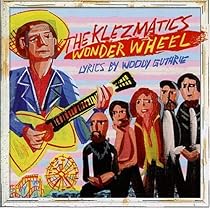
The Klezmatics have been nominated for a "Best Contemporary World Music Album" Grammy Award this month.
Wonder Wheel features songs of Woody Guthrie (most never before seen) and set to music by members of the Klezmatics.
On Wonder Wheel, The Klezmatics move away from klezmer on many of the cuts, even using an electric guitar to create a variety of contemporary sounds. The songs evoke Guthrie's experience in Brooklyn, an immigrant coming from the other direction, finding himself among European emigres, as well as blacks, Latinos and Asians.
You can read Marty Lipp's somplete review of this 2006 recording on RootsWorld
Sunday, December 10, 2006
The Jazz Singer's Return to Faith
 Like his earlier recording Lokshen, Enrico Fink has created a record that is a true treasure trove of information about the Jewish experience in Italy. On Il Ritorno alla Fede del Cantante di Jazz (The Jazz Singer's Return to Faith), the premise is to take the Jewish liturgical tradition in Italy (and in particular in Ferrara and Firenze) and distill it through Fink's experiences. The result is a fascinating work that can be highly traditional ("El male rachamim") or highly modern ("Lo Amut"). It inhabits the same spiritual ground as Robbie Robertson's soundtrack for "The Native Americans" (especially on "Eliyahu" with its dialog between the child singer and Fink), another work of passion for a culture endangered, as well as things like Hector Zazou's Songs from the Cold Seas, Tom Waits, U2 circa The Joshua Tree, cantor music and jazz, all of which come in and out of focus throughout this record creating a polymorphic work that is both contemporary and timeless, the effort behind it evident but not crushing.
Read more and listen to a song
Saturday, December 02, 2006
RIP Perry Henzell (The Harder They Come)

From the Jamaica Observer
Friday, December 01, 2006
PERRY Henzell, co-author, director and producer of one of Jamaica's first feature films The Harder They Come died on November 30th at his son's house in St. Elizabeth.
Henzell's latest project - No Place Like Home - a film about Jamaica, was set to be premiered at the Flashpoint film festival in Negril today. Yesterday, tributes were paid by politicians and persons who worked with the pioneer filmmaker.
Actor Carl Bradshaw, who had roles in The Harder They Come and No Place Like Home, described Henzell's contribution to the growth of Jamaica's cultural product as phenomenal.
"I remember him as a pioneer. He was the man who influenced Jamaica's film industry. The Harder They Come was more than a great visual as it is responsible for taking reggae music where it is today," Bradshaw said.
Perry Henzell also penned the novels, "Power Game," which was published in 1982, and "Cane," a historical drama, which was published in 2003.
Read the complete story at Jamaica Observer
Wednesday, November 22, 2006
Omar Sosa Broadcast - 11/25/2006
Omar Sosa and his Trio, featuring bassist Childo Tomas and drummer Steve Argüelles, will be guests on the Radio France-France INTER broadcast, Le Pont des Artistes, with host Isabelle Dhordain. Also on the show will be Cesaria Evora.
The program airs at 8:10 PM (until 10:00 PM) in France on Saturday, November 25, and can be heard at that time via streaming audio on the Internet by going to:
www.franceinter.fr
Sosa will play compositions from his new CD, "Live à FIP".
Internet streaming times worldwide:
8:10 PM Europe
7:10 PM U.K.
2:10 PM East Coast USA
1:10 PM Central USA
11:10 AM West Coast USA
4:10 AM Japan (November 26)
6:10 AM East Coast Australia (November 26)
The program airs at 8:10 PM (until 10:00 PM) in France on Saturday, November 25, and can be heard at that time via streaming audio on the Internet by going to:
www.franceinter.fr
Sosa will play compositions from his new CD, "Live à FIP".
Internet streaming times worldwide:
8:10 PM Europe
7:10 PM U.K.
2:10 PM East Coast USA
1:10 PM Central USA
11:10 AM West Coast USA
4:10 AM Japan (November 26)
6:10 AM East Coast Australia (November 26)
Thursday, November 16, 2006
Live Danish Folk , Roots and World Music - Online in November
4 Days Of Young Live Danish Folk and Roots Music - Directly On The Internet.
One of the biggest events in Denmark with live concerts and –recordings in sound and pictures for streaming, downloading and podcasting, will be held at the ‘Bruunske Pakhus’, Fredericia, Denmark. From the 26th to the 29th of November ‘The Bruunske’ will be humming, sizzling and exploding with an audience and an bevvy of bands and artists from the contemporary Danish folk music scene. All the concerts, the interviews on and behind the stages will be broadcast LIVE in sound and video.
The concerts will then be available for download and pod casting from the Internet at a later date. A total of 12 of the best Danish roots bands and artists present founr days of beautiful and intense acoustic music, great singing, mind ripping folk/rock/jazz, all with a focus in traditional Danish folk music, but with new, fresh and sometimes experimental outlooks.
Artists will include:
Trio Mio
Eivør
Phønix
Sussie Nielsen Band
Zar
Instinkt
Kasír
Tumult
Henrik Jansberg Band
Haugaard & Høirup
Serras
Afenginn
You can get schedule information at www.folkstreaming.dk
Links will be available online at RootsWorld during the shows.
One of the biggest events in Denmark with live concerts and –recordings in sound and pictures for streaming, downloading and podcasting, will be held at the ‘Bruunske Pakhus’, Fredericia, Denmark. From the 26th to the 29th of November ‘The Bruunske’ will be humming, sizzling and exploding with an audience and an bevvy of bands and artists from the contemporary Danish folk music scene. All the concerts, the interviews on and behind the stages will be broadcast LIVE in sound and video.
The concerts will then be available for download and pod casting from the Internet at a later date. A total of 12 of the best Danish roots bands and artists present founr days of beautiful and intense acoustic music, great singing, mind ripping folk/rock/jazz, all with a focus in traditional Danish folk music, but with new, fresh and sometimes experimental outlooks.
Artists will include:
Trio Mio
Eivør
Phønix
Sussie Nielsen Band
Zar
Instinkt
Kasír
Tumult
Henrik Jansberg Band
Haugaard & Høirup
Serras
Afenginn
You can get schedule information at www.folkstreaming.dk
Links will be available online at RootsWorld during the shows.
Thursday, October 26, 2006
Nordic Roots Festival Report
The Nordic Roots Festival in Minneapolis is one of the great world music events of the year.
One of our long time readers, David Smith, recently attended 8th Annual Festival and sent us his report and photos.
---------------------------
I have just returned from the Nordic Roots Festival in Minneapolis. This is a small, urban festival held at the Cedar Cultural Center, a small non-profit center based in an old movie theater which features music of all types during the year.
The festival features contemporary folk music from Norway, Sweden, Denmark, Finland, Samiland, and other places where Nordic roots can be found. They present a nice mix of music from those countries, with attention paid to diversity in presentation...
One of our long time readers, David Smith, recently attended 8th Annual Festival and sent us his report and photos.
---------------------------
I have just returned from the Nordic Roots Festival in Minneapolis. This is a small, urban festival held at the Cedar Cultural Center, a small non-profit center based in an old movie theater which features music of all types during the year.
The festival features contemporary folk music from Norway, Sweden, Denmark, Finland, Samiland, and other places where Nordic roots can be found. They present a nice mix of music from those countries, with attention paid to diversity in presentation...
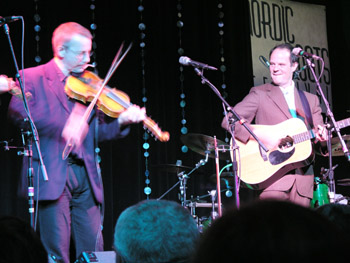
Wednesday, October 25, 2006
Two unique 'world music' concerts reviewed

There has long been a healthy spirit of non-conformism in Krakow, so it is no surprise to receive a visit here from musicians who refuse to compromise. Vocalist Saadet Turkoz and reedman Hans Koch certainly fall into this category, and their appearance at Club Re in Krakow, Poland on September 10th, 2006 was surely uncompromising. Turkoz' music is freely improvised, but is based on a personal interpretation of and reflection on the folk melodies her parents and their friends exposed her to when she was a child. The lullaby, the confession, the curse and the dirge all have their place. Building on this core of universal human experience, she is able to convey dramatically contrasting emotions. Philip Palmer reports from Krakow.

Carmen Consoli demurred when she was introduced as "the most successful singer and songwriter Italy has ever produced."
"I am just a little artist trying to express herself," she said. But for the past decade she has reigned as Italy's leading female rock star. A gifted lyricist and tunesmith, she has attracted a passionate and devoted following in her homeland with her woman-centric point of view and emotionally charged concerts. She is particularly popular with women, left-leaning youth and gays, but even older, straighter and more mainstream audiences love the self-described "bambina impertinente." At a recent concert at Joe's Pub in NYC and on her new recording, Eva Contro Eva, she is changing course towards a more roots-oriented music, still powerful and still uniquely her own. George De Stefano checked in on the "piccola cantatessa" while she was in New York.
Read the full reports in RootsWorld
Tuesday, October 17, 2006
The dark future of "world music?"
This press release was sent to us today.
It is offered with no additional comments: feel free to make your own!
cliff
-------------------------------------------------
Dear Editor:
Imagine hearing Jay-Z, on his upcoming world tour rapping in each country's native dialect! Voxonic, Inc. a New York based technology firm has developed proprietary software, which allows our voices to be seamlessly converted into foreign languages.
Through the use of a 10-minute sample of our voice, Voxonic's technology can replicate a specific voice in any language. Voxonic breaks our voices into "phonemes" that compose our voice, and hires an actor who is fluent in the desired language to record a lyric or speech (the actor does not have to mimic the original speaker in order for a successful conversion). The Voxonic technology aligns the two voice patterns, resulting in a 99 percent level of accuracy in the original speaker's voice.
Voxonic offers tremendous benefits to the entertainment industry. Imagine how much easier it will be for American entertainers to have the opportunity to reach out to their foreign demographic. With the record industries sales at an all-time low, the diminishment of language barriers makes marketing and entertainment opportunities endless. Some of those various opportunities include the following:
* Radio promotional opportunities for entertainers to make voice-drops in any language.
* Music artists being able to create concert introductions in any dialect.
* Record labels having the opportunity to make limited-edition albums and singles in a wide-range of languages.
Voxonic, Inc., which has additional involvement from world respected music industry pioneers such as entertainment executive Andre Harrell, and accomplished music producer Eddie F., is redefining music culture. "This technology will allow record companies to expand their artist's marketability globally," said Arie Deutsch, President of Entertainment for Voxonic Inc. "Think of how powerful it would be for Russian teens to hear Eminem rap in their native language".
---------------------------------
Like I said: no comment from me is needed, I think.
Please offer your own, though!
cliff
It is offered with no additional comments: feel free to make your own!
cliff
-------------------------------------------------
Dear Editor:
Imagine hearing Jay-Z, on his upcoming world tour rapping in each country's native dialect! Voxonic, Inc. a New York based technology firm has developed proprietary software, which allows our voices to be seamlessly converted into foreign languages.
Through the use of a 10-minute sample of our voice, Voxonic's technology can replicate a specific voice in any language. Voxonic breaks our voices into "phonemes" that compose our voice, and hires an actor who is fluent in the desired language to record a lyric or speech (the actor does not have to mimic the original speaker in order for a successful conversion). The Voxonic technology aligns the two voice patterns, resulting in a 99 percent level of accuracy in the original speaker's voice.
Voxonic offers tremendous benefits to the entertainment industry. Imagine how much easier it will be for American entertainers to have the opportunity to reach out to their foreign demographic. With the record industries sales at an all-time low, the diminishment of language barriers makes marketing and entertainment opportunities endless. Some of those various opportunities include the following:
* Radio promotional opportunities for entertainers to make voice-drops in any language.
* Music artists being able to create concert introductions in any dialect.
* Record labels having the opportunity to make limited-edition albums and singles in a wide-range of languages.
Voxonic, Inc., which has additional involvement from world respected music industry pioneers such as entertainment executive Andre Harrell, and accomplished music producer Eddie F., is redefining music culture. "This technology will allow record companies to expand their artist's marketability globally," said Arie Deutsch, President of Entertainment for Voxonic Inc. "Think of how powerful it would be for Russian teens to hear Eminem rap in their native language".
---------------------------------
Like I said: no comment from me is needed, I think.
Please offer your own, though!
cliff
Thursday, September 21, 2006
Kepa Junkera paints his vision of the world
Globalista Basque accordionist Kepa Junkera explores a series of audio-impressions of cities around the world that he has visited in his latest world music tour de force, "Hiri".
Guests include Patrick Vaillant and Melonious Quartet, Mercedes Peon, Ibon Koteron, Enzo Avitibile, Andy Narell, Bulgarka, Glen Velez, Eliseo Parra, Gilles Chabenat, Xose Manuel Budino, Tactequete and dozens of other musicians from around the world.
Release date is October 1.
Guests include Patrick Vaillant and Melonious Quartet, Mercedes Peon, Ibon Koteron, Enzo Avitibile, Andy Narell, Bulgarka, Glen Velez, Eliseo Parra, Gilles Chabenat, Xose Manuel Budino, Tactequete and dozens of other musicians from around the world.
Release date is October 1.
Thursday, September 14, 2006
Belize celebrates 25 years of (musical) independence
The nation of Belize is celebrating it's 25th anniversary this year with art exhibits, international guests, parties and celebrations around the country.
I thought you might like to look back on some of RootsWorld's reviews and articles about the music of Belize, to virtully join in the celebration.
An overview of Garifuna Music
Pen Cayetano and the Original Turtle Shell Band
Aurelio Martinez
Cult Cargo: Belize City Boil Up
Lebeha Boys Garifuna Youth Band
Leroy Young "The Grandmaster"
From Bakabush: The First Ten Years of Stonetree
There's lots more, too... just use the search box on the web site to find a lot more music.
Happy Birthday, Belize
I thought you might like to look back on some of RootsWorld's reviews and articles about the music of Belize, to virtully join in the celebration.
An overview of Garifuna Music
Pen Cayetano and the Original Turtle Shell Band
Aurelio Martinez
Cult Cargo: Belize City Boil Up
Lebeha Boys Garifuna Youth Band
Leroy Young "The Grandmaster"
From Bakabush: The First Ten Years of Stonetree
There's lots more, too... just use the search box on the web site to find a lot more music.
Happy Birthday, Belize
Wednesday, September 13, 2006
Conquering the Silence - Live in Ramallah
“In a situation of oppression, where silence is utter complicity, art cannot be but a form of resistance, rehabilitation, and progressive transformation.”
I am not sure what the internet availibility of this September 17th program will be, but it looks like it could be a unique international event, and it certainly includes a cast of important artists. I hope to have more information soon. For the moment, I pass on this information I just received from members of the ensemble El-Funoun - CF
Conquering the Silence
For freedom, justice and peace in Palestine, Lebanon and Iraq
An international manifestation of cultural resistance, featuring live music, poetry, theater, film and dance, transmitted via satellite links between Ramallah, Beirut, Cairo, London, Paris, Dubai and New York.
Presented by:
Marcel Khalife (Lebanon), Mai Masri (Palestine), Khalid M. Ali (Iraq), Breyten Breytenbach (South Africa), John Williams (UK), Amin Haddad (Egypt), Khalid Jubran (Palestine), Roger Assaf (Lebanon), El-Funoun Dance (Palestine), Kamilia Jubran (Palestine), Yussof Abu Wardah (Palestine), Ali Amr and Nai Barghouti (Palestine).
Sunday, September 17
8:00 pm at Ramallah Cultural Palace
The entire event will be broadcast live on Al-Jazeera Direct
Posted by Popular Art Centre, Al-Urmawi Center for Mashriq Music and El-Funoun Dance Troupe
I am not sure what the internet availibility of this September 17th program will be, but it looks like it could be a unique international event, and it certainly includes a cast of important artists. I hope to have more information soon. For the moment, I pass on this information I just received from members of the ensemble El-Funoun - CF
Conquering the Silence
For freedom, justice and peace in Palestine, Lebanon and Iraq
An international manifestation of cultural resistance, featuring live music, poetry, theater, film and dance, transmitted via satellite links between Ramallah, Beirut, Cairo, London, Paris, Dubai and New York.
Presented by:
Marcel Khalife (Lebanon), Mai Masri (Palestine), Khalid M. Ali (Iraq), Breyten Breytenbach (South Africa), John Williams (UK), Amin Haddad (Egypt), Khalid Jubran (Palestine), Roger Assaf (Lebanon), El-Funoun Dance (Palestine), Kamilia Jubran (Palestine), Yussof Abu Wardah (Palestine), Ali Amr and Nai Barghouti (Palestine).
Sunday, September 17
8:00 pm at Ramallah Cultural Palace
The entire event will be broadcast live on Al-Jazeera Direct
Posted by Popular Art Centre, Al-Urmawi Center for Mashriq Music and El-Funoun Dance Troupe
Sunday, September 03, 2006
Flexibility, artistic freedom and innovation - L Subramaniam
• Flexibility, artistic freedom and innovation are crucial for the survival of traditional music. Only then can it reach the masses— Dr L. Subramaniam

For violin virtuoso, Dr L Subramaniam, music has always been a bundle of contradictions. So, inspite of being a stickler for tradition, he constantly innovates to improve techniques.
The master of Indian violin talks with the Mumbai Mirror about his latest work, Sangeet Sangam.
For violin virtuoso, Dr L Subramaniam, music has always been a bundle of contradictions. So, inspite of being a stickler for tradition, he constantly innovates to improve techniques.
The master of Indian violin talks with the Mumbai Mirror about his latest work, Sangeet Sangam.
Friday, September 01, 2006
Baghdad to New Mexico: the journey of world musician Rahim Al Haj
Music is like a clock, it moves around in a circle, declares Rahim Al Haj, an innovative musician whose own life has been formed by cycles of music. He has travelled in his person and in his music from his homeland of Iraq into exile and then back home again as a true messenger of hope. A Baghdad native and a serious student of the classical and folk music of his native Iraq, he was imprisoned twice by the regime of Saddam Hussein, in part for refusing to compose musical tributes to that regime's military adventures during the 1980s. His life came under threat by the Saddam regime at the time of the First Gulf War. Rahim eventually made his way to New Mexico in 2000, adjusting to a very different culture, and re-establishing himself musicically. His work is marked by a thematic dedication to principles of peace and reconciliation in the form of wordless musical "poems" and by formal innovation on the ancient styles of the Iraqi maqam. Bill Nevins talks with this composer and musician of true world music in RootsWorld.
Read More
Friday, August 25, 2006
Exploring Turkish-Sephardic roots with Janet and Jak Esim

The existence of a Jewish community is maybe not the first thing that comes to mind when you think of Turkey, but in fact Jewish populations were present in Anatolia way before the arrival of the Turkish populations from the East... The Jewish community in Istanbul still has deep roots and is well represented in all fields, from cultural activities to finance and industry... Since the late 80s, Janet and Jak Esim have intensively researched and represented Turkish Jewish traditions - especially Sefardi but also Askenazi - with their own complex story of differences and similarities. Their long-term commitment has produced half a dozen recordings. Francesco Martinelli explores the history of the music and the evolution of The Janet and Jak Esim Ensemble.
Read more
Wednesday, August 16, 2006
Marcel Khalife's plea for peace

Marcel Khalife held a press conference at the UNESCO International Headquarters in Paris on August 3 and delivered a plea to his fellow artists around the world to take a stand on the Israeli war into Lebanon.
You can read the complete text of his message in this PDF file
Moacir Santos dies at 80
Moacir Santos, the Pernambuco-born Brazilian musical legend who influenced 2 generations of artists in his native country and beyond died last week at the age of 80.
He was recently enjoying a renewed interst in his work via a compliation of new recordings of his compositions by younger and better-known Brazilian musicians, including Milton Nascimento and Gilberto Gil titled "Ouro Negro'' and a reqworking of his classics by Mário Adnet (guitar) and Zé Nogueira called "Choros & Alegria."
He was recently enjoying a renewed interst in his work via a compliation of new recordings of his compositions by younger and better-known Brazilian musicians, including Milton Nascimento and Gilberto Gil titled "Ouro Negro'' and a reqworking of his classics by Mário Adnet (guitar) and Zé Nogueira called "Choros & Alegria."
Saturday, July 29, 2006
Enzo Avitabile returns from the 'sacred south'

Enzo Avitabile
Sacro Sud (Folkclub Ethnosuoni)
The Neopolitan reed player returns in 2006 with a powerful new recording of sacred songs from sourthern Italy, performed in sparse, all acoustic settings that evoke wonder and passion. The ensemble is stellar and includes Luigi Lai: Launeddas; Maurizio Martinotti: Ghironda; Mario De Rosa: Mandoloncello; Giancarlo Abbatiello: Chitarra Napoletana; Carlo Avitabile: Tamburi and two vocal ensembles: Cantori Del Miserere Di Sessa and Polifonica Alphonsiana.
Listen:
More info
Friday, July 28, 2006
Etnika: Maltese music, new world music
The international radio program The World ran an interesting interview with Maltese musician Andrew Alamango, of the ensemble Etnika. He talks about the music, the making of the intstruments, etc, and it includes some muisic form their 1999 CD Zifna
Listen to the program from The World
Read the RootsWorld review of Zifna, and an earlier interview with members of the ensemble
The CD is available from cdRoots
Listen to the program from The World
Read the RootsWorld review of Zifna, and an earlier interview with members of the ensemble
The CD is available from cdRoots
Monday, July 24, 2006
Belgium's Think of One: running in Trafico
Loose in attitude but capable of creating some very tight boundary-crossing music, Belgium's Think of One combine slippery Roma style horns with Brazilian percussion and vocals, a sonic sense as open-minded as that of Manu Chao or Lo Jo and a willingness to borrow a groove from anywhere that strikes their fancy. While they first made a name beyond their home base of Antwerp with music that blended their brash, bouncy brass with Moroccan sounds, Trafico takes a predominantly Brazilian feel and runs gleefully with it...
Full review coming soon in RootsWorld
If you subscribed to RootsWorld,a you would already have this and dozens of other reviews and articles (and a free CD)!
Full review coming soon in RootsWorld
If you subscribed to RootsWorld,a you would already have this and dozens of other reviews and articles (and a free CD)!
Alan Stivell: electronic backbeats and rolling, directionless melodies...
Veteran Breton harpist Alan Stivell can't seem to decide if he wants to dabble in hip-hop or waft away in the New Age aether on Explore. Melody lines are sketchily defined, then abandoned altogether. The innovative harping for which he's known is almost an afterthought here, as all is abandoned in service to the groove. He does do a bit of aimless solo harp wandering on the title track, but it's nothing for the memory books. While there's a lot of colorful experimenting with timbres and textures, the songs are not strong enough to stand up to the tonal onslaught...
Read the complete review in RootsWorld
Read the complete review in RootsWorld
Monday, July 17, 2006
Classic Congolese back on CD

A lot of classic Congolese music is back on CD this month. These inportant Sonodisc recordings come and go on the market, so it's great to see so many being reissued at the same time.
Tabu Ley Rochereau And Afrisa International - Kaful Mayay 1973
Not only neo-traditional 'Kaful Mayay' but also gorgeous 'Nzale,' hypnotic 'Aon-Aon' and 5 other tracks from the early 70s, including two making their first appearance on CD.
Grand Kalle et l'African Jazz - Merveilles du Passe
So good it took three CDs to capture it all! Grand Kallé, Dr. Nico, Dechaud, Mujos, Vicky Longomba, Rochereau, (briefly) Manu Dibango: the first great modern Congolese band at its peak. Marvelous indeed and truly essential.
More titles now available: (see more info on the whole series here)
Grand Kallé & L'african Jazz - Merveilles Du Passé, Vol. 2 (1961-1962)
Grand Kallé & L'african Jazz - Succes Des Années 50/60, Vol. 1
Grand Kallé & L'african Jazz - Succes Des Années 50/60, Vol. 2
Grand Kallé & L'african Team - Volume 1
Grand Kallé & L'african Team - Volume 3
Grand Kallé & L'african Team - Volume 2
African Fiesta - Nico, Kwamy, Rochereau & L'african Fiesta
African Fiesta - Makila Eyina Nzoto
Tabu Ley Rochereau - Le Seigneur Rochereau
Rochereau, Tabu Ley - À L'olympia
Rochereau, Tabu Ley - L'afrisa International
Rochereau & Franco - Lisanga Ya Banganga (2 CDs)
Tabu Ley Rochereau - Rochereau, Sam Mangwana & L'African Fiesta National
Rochereau, Tabu Ley - Tete Nakozonga
Rochereau, Tabu Ley - Sacramento
Rochereau, Tabu Ley - Rochereau & L'african Fiesta National, Vol. 1 (1964-1966)
Tabu Ley Rochereau And Afrisa International - Kaful Mayay 1973-75
Rochereau, Tabu Ley - Rochereau & L'african Fiesta National, Vol. 2 (1966-1969)
Tabu Ley Rochereau - 1968/1969
Tabu Ley Rochereau - 1971/1972/1973
Rochereau, Tabu Ley - Sorozo
These CDs are all available via cdRoots
Sunday, July 16, 2006
RIP: Micheal O Domhnaill, guitarist and founding member of the Bothy Band
Micheal Ó Domhnaill, guitarist and founding member of the Bothy Band died July 8 at the age of 54.
As a member of the legendary 1970s group The Bothy Band, O Domhnaill, along with his sister, Triona, introduced audiences to a contemporary instrumental form of Irish music and modern interpretations of Gaelic song. The family grew up in Kells, County Meath, but spent their summers in the Donegal Gaeltacht, where they first heard the music that would make the band reality
Micheal, Triona and sister Maighread formed their first group, Skara Brae, with guitarist Daithi Sproule, in 1970. Micheal and Maighread joined Triona in what would become the The Bothy Band in the mid-1970s.
You can read a fuller obit in The Herald and on the unofficial Nightnoise web site
As a member of the legendary 1970s group The Bothy Band, O Domhnaill, along with his sister, Triona, introduced audiences to a contemporary instrumental form of Irish music and modern interpretations of Gaelic song. The family grew up in Kells, County Meath, but spent their summers in the Donegal Gaeltacht, where they first heard the music that would make the band reality
Micheal, Triona and sister Maighread formed their first group, Skara Brae, with guitarist Daithi Sproule, in 1970. Micheal and Maighread joined Triona in what would become the The Bothy Band in the mid-1970s.
You can read a fuller obit in The Herald and on the unofficial Nightnoise web site
Friday, July 14, 2006
World Music, World Cup (1973)
World music hypoxia
Various Artists: Chill Out World: The Highlands Edition
This compilation bears so little resemblance to actual world music, you would honestly get a more international musical experience by phoning a series of embassies and being put on hold. Each track is like flying to a different far off land, and never making it past the duty free shop. Everything has been sanitized and pre-packaged for your consumption. Except I'm using "consumption" in the tuberculosis sense. One can only assume that the producers spent so much time in the highlands, that hypoxia has damaged their brains. - Louis 'please hold for an operator' Gibson
This compilation bears so little resemblance to actual world music, you would honestly get a more international musical experience by phoning a series of embassies and being put on hold. Each track is like flying to a different far off land, and never making it past the duty free shop. Everything has been sanitized and pre-packaged for your consumption. Except I'm using "consumption" in the tuberculosis sense. One can only assume that the producers spent so much time in the highlands, that hypoxia has damaged their brains. - Louis 'please hold for an operator' Gibson
Sunday, July 09, 2006
Elena Ledda: singer at the ancient crossroads of Sardina

Elena Ledda, trained at the Cagliari conservatory, has scoured Sardinia to assimilate its various folk styles and genres, gaining national stature as the music's foremost interpreter and proponent. Amargura, her eighth release, reveals Ledda at the apex of her melismatic powers, singing in Sardo and bringing the music of this ancient cultural crossroads brilliantly, poignantly alive. Her matchless voice is framed by a host of unusual and compelling work by some of Italy's foremost folk artists...
Read the complete review
Saturday, July 01, 2006
The Mouth Harp Feted in Amsterdam
 The 5th International Jew’s Harp Festival will take place in Amsterdam from July 28th through July 30th, in association with the International Jew’s Harp Society. Hundreds of players, Jew’s harp makers and researchers from remote corners of the world will gather in Amsterdam to promote the versatility of the small instrument.
 The core of the festival is the participation of 60 instrumentalists and their ensembles which represent the diverging musical traditions. In addition to a series of concerts in which mixed ensembles will highlight the versatility of the Jew’s harp, there will be cinematography, lectures, demonstrations and a market.
The Jew’s harp players from Asia with their electrifying and idiomatic sound interpret the authentic musical culture which has remained almost unchanged over the centuries (e.g. Spiridon Shishigin from Sakha-Yakutia, Bolot Bairyshev from Altay, Robert Zagredtinov from Bashkortostan). Also in Europe there are some remnants of the original folklore (e.g. Svein Westad from Norway, Manfred Russmann from Austria) but much experimenting with modern instruments takes place as well (Aron Szilagy from Hungary, Anton Bruhin from Switzerland, Tran Quang-Hai from Vietnam/France, Phons Bakx from Holland, Tapani Varis from Finland).
Get more info from Jew’s Harp Society
Thursday, June 29, 2006
LA Law star goes latin
If you had to guess which former LA Law cast member had a new latin folk CD out, you'd probaby guess Jimmy Smits, right? Surprise! It's Michele Greene; who it turns out is half Latina, comes from a rich singing tradition, and has quite a voice as well. She's on the road supporting her new CD "Luna Roja" and also has a new book out "Chasing the Jaguar." More info at MicheleGreene.com.
Tuesday, June 27, 2006
Three recordings from Palestine and the world
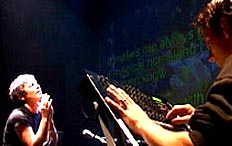 Three recent recordings by Palestinian musicians, each, in its own way, quite brilliant. Taken as a whole, they give a sense of the range of contemporary Palestinian music, from the rooted-in-tradition to the most avant-garde. Two of these recordings are from artists with what is probably the most important and creative contemporary Palestinian ensemble, Sabreen. Kamilya Jubran (left) served as Sabreen's lead vocalist and qanun player for twenty years, while Wissam Murad remains one of Sabreen's core members. Sabreen's music has always been characterized by deep roots in the traditions of Arabic music, particularly that of the takht, the classical small ensemble known for its use of improvisation. Throughout its long recording career, Sabreen has been known for its creative ability to incorporate the rhythms and sounds of jazz, reggae, rembetika, blues, contemporary Arabic pop music, and even hip-hop, while at the same time to remain firmly grounded in the tradition. Although the members of Le Trio Joubran are not connected to Sabreen, their work too is at once innovative yet tradition-grounded...
Ted Swedenburg investigates these daring new works: Read More
Wednesday, June 21, 2006
A Happy Reunion: Solas Y10

A Happy Reunion
Solas hit the traditional music seen in 1996 with a bang. Formed, almost by chance, to play a few festivals, the group found themselves with an instant fan-base and critical acclaim that was unusual for an untried band. Now, ten years later, playing their own brand of musically-tight, often lightening-fast, and always uniquely well-crafted traditional music, Solas has proven itself as a supergroup on the Celtic scene. Helene Dunbar talks with Seamus Egan about 10 years of Solas. Read More
Friday, June 09, 2006
Cheikha Rimitti, R.I.P.
Ted Swedenburg writes:
Cheikha Rimitti died of a heart attack in Paris at the age of 83 on May 15. She was a performer right to the end; she had just performed in Paris two days before she died. Rimitti was one of the great cheikhas of modern rai, releasing her first recording in 1952, but it was her 1954 release, "Charrak, Gattaa," that made her renowned, and infamous, throughout Algeria. The song was considered by some to be an attack on the preservation of female virginity. After independence, her music was banned by the NLF from the airwaves, because of its vulgarity.
Rimitti had a reputation for bawdiness, and her name reportedly came from her habit of demanding more drinks: "Remettez!"--"Give me another." Cheikha Give Me Another Drink. Her reputation for excess should not be exxagerated, as it is all too often in publicity about rai. After an accident in 1971, Rimitti gave up drinking and smoking, and went on hajj in 1976. I even have a cassette, purchased in Paris' Barbès district, which she recorded under the name Hajja Rimitti.
You can read the rest of his obit here
Cheikha Rimitti died of a heart attack in Paris at the age of 83 on May 15. She was a performer right to the end; she had just performed in Paris two days before she died. Rimitti was one of the great cheikhas of modern rai, releasing her first recording in 1952, but it was her 1954 release, "Charrak, Gattaa," that made her renowned, and infamous, throughout Algeria. The song was considered by some to be an attack on the preservation of female virginity. After independence, her music was banned by the NLF from the airwaves, because of its vulgarity.
Rimitti had a reputation for bawdiness, and her name reportedly came from her habit of demanding more drinks: "Remettez!"--"Give me another." Cheikha Give Me Another Drink. Her reputation for excess should not be exxagerated, as it is all too often in publicity about rai. After an accident in 1971, Rimitti gave up drinking and smoking, and went on hajj in 1976. I even have a cassette, purchased in Paris' Barbès district, which she recorded under the name Hajja Rimitti.
You can read the rest of his obit here
Wednesday, May 24, 2006
Hamza El Din: the last turn of the water wheel

It's been a bad week for world music, first with the passing of rai great Cheikha Rimitti, and now Nubian master musician Hamza El Din
Hamza el Din was at the forefront of the first wave of 'world music' with his recording "Escalay" (1971) and brought the music of North Africa the same kind of attention that Ravi Shankar was bringing to the music of India. He made the ud an important part of the global movement towards international musical communication. He was also a great believer in the healing power inherent in music, and made that part of his mission.
he also never shied away from experimentation, performing with many diverse musicians from around the world, including Kronos Quartet. His 1999 recording "A Wish" inlcuded contributions from Kronos cellist Joan Jeanrenaud, composer and pianist W.A. Mathieu, Jordanian percussionist Hani Naser and Japanese diva Shizuru Ohtaka.
Saturday, May 20, 2006
Cheikha Rimitti, Rai diva dies
I just heard on the BBC World Service that the mother of Algerian Rai music, Cheikha Rimitti, has died at the age of 83. More info here. Rimitti blazed the trail for contemporary Algerian artists like Khaled, Rachid Taha, and Cheb Mami.
Friday, May 05, 2006
Rhythm and Jews: The Afro-Judeo Connection

The 2006 Toronto Jewish Film Festival will explore the Jewish/Black musicial connections of the past and present in a 12 film retrospecitve titled Rhythm & Jews May 6th through May 14th. A free panel discussion will be held on May 9 to explore the subject in more detail. David Chevan and Warren Byrd (Members of the Connecticut-based Afro-Semitic Experience - recently featured in a RootsWorld online concert) will sit on the panel and perform live.
According to the organizers, "Rhythm & Jews is comprised of 12 films tracing the synthesis of Jewish and Black music, from the wave of Eastern European Jewish immigrants to America starting in the 1880s, through to the vaudeville, Tin Pan Alley and Big Band eras, to the Golden Age of Broadway, the Brill Building years of the ’50s and ’60s and the heydays of jazz and blues, right up to the rap, reggae and hip hop of the present day."
You can get more information, and see trailers to a number of the movies, the the TJFF web site.
Wednesday, May 03, 2006
African Xylophone Festival in NYC

On Saturday, May 6 and Sunday, May 7, some good friends of RootsWorld will host to the second annual African Xylophone Festival in NYC. “AXF2” will expand on the variety of xylophones presented last year, with the spider-webbed gyil of Ghana, the balafon of the historic empire of Mali, and the resonant embaire of Uganda, joined by the timbila of Mozambique, as well as the log-drum krin from the forests of Guinea, the spirited namaddu (tuned drums) of Uganda, and the metallic budongo of East Africa. The African Xylophone Festival is sponsored by Jumbie Records with the 92nd Street Y, the Columbia University Arts Initiative and the Center for Ethnomusicology at Columbia University. The festival includes two nights of concerts and three days of workshops
Highlights:
* Bernard Woma Trio—traditional and modern compositions for gyil by the solo xylophonist of Ghana’s National Dance Company
* Famoro Dioubate’s “Kakande”—classical balafon repertoire of the Mande peoples of West Africa given a New York flavor with flute, bass, cello and congas
* Dallam-Dougou—innovative music finding common ground between Hungarian folk music and the xylophone aesthetic of Guinea
* Imaginary Homeland—a jazz quartet of African xylophone, strings, and saxophone, presenting modern music for the Ghanaian gyil
* Biakuye Unity Ensemble—traditional music of southern Uganda featuring the embaire xylophone, budongo kalimba, and namaddu tuned drums.
* Nora Balaban's "Timbila Project" – the timbila xylophone of Mozambique’s Chopi people meets electric guitar and Afropop
* Valerie Naranjo—solo transcriptions of the gyil xylophone performed on Euro-American marimba, with piano and percussion
* A NeNe Wofa — The youth of Duffield Street come together in a celebration of Mande culture
* St. Ann's African Xylophone Ensemble of Brooklyn—New York’s youngest African xylophone ensemble, of 2nd and 3rd graders
* Workshops for children and adults at Columbia University, covering three different African xylophone traditions
* Advanced masterclasses for professional xylophonists with master musicians of Ghana and Guinea
* Jumbie Xylophone Summit—a rare meeting of xylophone masters from different African traditions on one performance stage
* Jumbie Orchestra: AXF Grand Finale—A festival orchestra of Jumbie Records artists perform Bernard Woma’s composition "Gyil Mambo.”
More info
Saturday, April 29, 2006
Nuestro Himno: another diversion
The media generated 'debate' over this new version of the US national anthem seems to me to be just one more stupid diversion to entertain a crumbling society.
My complaint is not the language (who cares? ) but the utterly boring music that acompanies it (why wasn't there a protest when Whitney Houston croaked it out? or Metallica? or Beyonce?).
I am waiting to hear some Norteno, rumba, cha cha cha and flamenco versions. That will certainly make for better listening than this current pop disater.
Give me the Hendrix version any day!
cliff
My complaint is not the language (who cares? ) but the utterly boring music that acompanies it (why wasn't there a protest when Whitney Houston croaked it out? or Metallica? or Beyonce?).
I am waiting to hear some Norteno, rumba, cha cha cha and flamenco versions. That will certainly make for better listening than this current pop disater.
Give me the Hendrix version any day!
cliff
Tuesday, April 25, 2006
The immigration theory of world music
I do not normally present 'press promos' as part of this blog, but my long time compadre-in-music Ken Braun of Stern's Music in NY sent out this promo sheet with his current releases, and I just had to share it with you all...
Cliff Furnald, ed.
-----------------------------
Dear friends and colleagues,
The first people that ever lived in North America walked across the iced-over Bering Strait from Siberia to Alaska about 10,000 years ago. They carried no documents and were not authorized to enter this country. Border bears spotted them and gave chase, and such encounters resulted in casualties on both sides. Law enforcement was obviously inadequate. Some of the "frozenbacks" were deported to their country of origin, but many (no one knows exactly how many) slipped into America. It’s been happening like that ever since, and not only on the northern border but also along every other frontier. See what happens without strict immigration controls? The country fills up entirely with people from somewhere else.
At least it’s been good for music. Without immigrants, American music would be little more than birdcalls, frog choruses, coyote howls and the wind in the trees. Thanks to all of the people who have come to this country from somewhere else, starting with Asians, followed by Europeans, Africans, Central and South Americans (whose ancestors had themselves originated elsewhere) and of course islanders from near and far, American music is the most diverse, dynamic and popular in the world. This phenomenon isn’t just historical, something that happened long ago; it’s ongoing and as vital now as it ever was. Consider how the Celtic music revival of the past few decades has inspired the bluegrass revival in this country, or the ways Indian and Indonesian forms have influenced some of America’s best modern "classical" composers. Think of the immense influence of Jamaican dub and dancehall on hip-hop, or the various Latin styles that color everything from the most serious jazz to the most ephemeral pop these days as much as in the past hundred years.
And African music? Elements of African music so thoroughly imbue so many kinds of American music that we can hardly imagine what our nation would sound like without them. True, this process began centuries ago, but it didn’t end with the abolition of the Atlantic slave trade. Africans are still coming to America – this time of their own accord if not always by the book (ironic in light of the fact that it was once legal to transport their ancestors here against their will) – and they’re bringing new music with them. From African dance classes and drum circles to African club nights in cities across the country, and on to the millions of records sold by African-born stars such as Dave Matthews and John Legend, Africans continue to make themselves heard in America. The African components of American music are being replenished, building on what came before but introducing new things too, further enriching the national culture.
We at Stern’s Music favor liberal immigration policies. We believe hospitality makes us all better people. We’re thankful for our foreign-born colleagues and proud to promote the music of immigrants. We’re especially pleased this month to release three CDs by African artists now living and working in the United States. Martino Atangana, from Cameroon, teaches at the City University of New York Graduate Center, having gotten his Ph.D. at the Sorbonne, but he has also played guitar with Manu Dibango, Paul Simon, Jean-Luc Ponty, Henri Dikongue, Hassan Hakmoun and Shannon Jackson. Keeping one foot on the lecture forum and the other on the stage, he’s been gigging in and around New York for seven or eight years and has won a following that’s as multi-ethnic as his band, African Blue Note. Martino is a particularly nimble bikutsi guitarist but, as his new album demonstrates, he and his band are adept at Caribbean music and contemporary jazz as well as various African styles. One member of African Blue Note, pianist Azouhouni Adou, has recorded a CD of his own. In addition to the keyboards, Azouhouni plays clarinet, sings, and leads his own band, all with impressive skill and verve. He and his sidemen play in a variety of styles too, with a particular flair for funky jazz.
Guelel Kumba also came through New York, but this Senegalese-born Fulani singer and guitarist has wound up, seemingly by gravitational pull, in the same part of northern Mississippi that has given birth to so many great bluesmen. There he and a bunch of local musicians have formed a band they call Afrissippi. Like the late Ali Farka Touré jamming with Taj Mahal, Gatemouth Brown or Ry Cooder, Afrissippi instinctively finds the crossroads where West African traditions and the blues meet. This is truly African-American music. In fact all three of the artists we’re focusing on this month are making music that is both African and American. Pass out the green cards.
We’re not saying everyone should settle in America. On the contrary, we think that instead of either trying to keep immigrants out the U.S. or throwing open the gates to unregulated cheap labor, our government and businesses would do far more good by supporting international policies and programs that strengthen other countries’ cultures, economies and democracies. Help to give people good reasons to stay home, opportunities to lead fulfilling lives wherever they are. At its best (though perhaps its most paradoxical), globalism encourages nationhood and independence as much as freedom of movement and enterprise. It comes down to all people’s right – and the actual possibility – of self-determination. Which is why we’re so enthusiastic about Midnight in Mali. (You knew there had to be a musical angle.) This latest Stern’s Africa CD was recorded at an extraordinary concert in Bamako featuring a once-in-a-lifetime array of some of Mali’s greatest artists, including guitarist Djelimady Tounkara, balafon virtuoso Keletigui Diabaté, n’goni whiz Basekou Kouyaté and singer Dieneba Seck, all under the direction of Habib Koité. As Banning Eyre’s introduction observes, "It was that rare occasion when musical giants dare to risk the new, rely on their wits, and freely explore their shared heritage: the majestic, matchless variety of Malian music." Such a concert could not have happened in New York, only in Bamako. So while we advocate mixing and exchanging, we also celebrate tradition and uniqueness, and we see no contradiction in that. Our slogan is "Support local music everywhere!"
Stay well,
Ken Braun
Stern’s Music
-------------------------------------------------
You will find (or will find soon) many of the CDs mentioned by Ken at cdRoots
Cliff Furnald, ed.
-----------------------------
Dear friends and colleagues,
The first people that ever lived in North America walked across the iced-over Bering Strait from Siberia to Alaska about 10,000 years ago. They carried no documents and were not authorized to enter this country. Border bears spotted them and gave chase, and such encounters resulted in casualties on both sides. Law enforcement was obviously inadequate. Some of the "frozenbacks" were deported to their country of origin, but many (no one knows exactly how many) slipped into America. It’s been happening like that ever since, and not only on the northern border but also along every other frontier. See what happens without strict immigration controls? The country fills up entirely with people from somewhere else.
At least it’s been good for music. Without immigrants, American music would be little more than birdcalls, frog choruses, coyote howls and the wind in the trees. Thanks to all of the people who have come to this country from somewhere else, starting with Asians, followed by Europeans, Africans, Central and South Americans (whose ancestors had themselves originated elsewhere) and of course islanders from near and far, American music is the most diverse, dynamic and popular in the world. This phenomenon isn’t just historical, something that happened long ago; it’s ongoing and as vital now as it ever was. Consider how the Celtic music revival of the past few decades has inspired the bluegrass revival in this country, or the ways Indian and Indonesian forms have influenced some of America’s best modern "classical" composers. Think of the immense influence of Jamaican dub and dancehall on hip-hop, or the various Latin styles that color everything from the most serious jazz to the most ephemeral pop these days as much as in the past hundred years.
And African music? Elements of African music so thoroughly imbue so many kinds of American music that we can hardly imagine what our nation would sound like without them. True, this process began centuries ago, but it didn’t end with the abolition of the Atlantic slave trade. Africans are still coming to America – this time of their own accord if not always by the book (ironic in light of the fact that it was once legal to transport their ancestors here against their will) – and they’re bringing new music with them. From African dance classes and drum circles to African club nights in cities across the country, and on to the millions of records sold by African-born stars such as Dave Matthews and John Legend, Africans continue to make themselves heard in America. The African components of American music are being replenished, building on what came before but introducing new things too, further enriching the national culture.
We at Stern’s Music favor liberal immigration policies. We believe hospitality makes us all better people. We’re thankful for our foreign-born colleagues and proud to promote the music of immigrants. We’re especially pleased this month to release three CDs by African artists now living and working in the United States. Martino Atangana, from Cameroon, teaches at the City University of New York Graduate Center, having gotten his Ph.D. at the Sorbonne, but he has also played guitar with Manu Dibango, Paul Simon, Jean-Luc Ponty, Henri Dikongue, Hassan Hakmoun and Shannon Jackson. Keeping one foot on the lecture forum and the other on the stage, he’s been gigging in and around New York for seven or eight years and has won a following that’s as multi-ethnic as his band, African Blue Note. Martino is a particularly nimble bikutsi guitarist but, as his new album demonstrates, he and his band are adept at Caribbean music and contemporary jazz as well as various African styles. One member of African Blue Note, pianist Azouhouni Adou, has recorded a CD of his own. In addition to the keyboards, Azouhouni plays clarinet, sings, and leads his own band, all with impressive skill and verve. He and his sidemen play in a variety of styles too, with a particular flair for funky jazz.
Guelel Kumba also came through New York, but this Senegalese-born Fulani singer and guitarist has wound up, seemingly by gravitational pull, in the same part of northern Mississippi that has given birth to so many great bluesmen. There he and a bunch of local musicians have formed a band they call Afrissippi. Like the late Ali Farka Touré jamming with Taj Mahal, Gatemouth Brown or Ry Cooder, Afrissippi instinctively finds the crossroads where West African traditions and the blues meet. This is truly African-American music. In fact all three of the artists we’re focusing on this month are making music that is both African and American. Pass out the green cards.
We’re not saying everyone should settle in America. On the contrary, we think that instead of either trying to keep immigrants out the U.S. or throwing open the gates to unregulated cheap labor, our government and businesses would do far more good by supporting international policies and programs that strengthen other countries’ cultures, economies and democracies. Help to give people good reasons to stay home, opportunities to lead fulfilling lives wherever they are. At its best (though perhaps its most paradoxical), globalism encourages nationhood and independence as much as freedom of movement and enterprise. It comes down to all people’s right – and the actual possibility – of self-determination. Which is why we’re so enthusiastic about Midnight in Mali. (You knew there had to be a musical angle.) This latest Stern’s Africa CD was recorded at an extraordinary concert in Bamako featuring a once-in-a-lifetime array of some of Mali’s greatest artists, including guitarist Djelimady Tounkara, balafon virtuoso Keletigui Diabaté, n’goni whiz Basekou Kouyaté and singer Dieneba Seck, all under the direction of Habib Koité. As Banning Eyre’s introduction observes, "It was that rare occasion when musical giants dare to risk the new, rely on their wits, and freely explore their shared heritage: the majestic, matchless variety of Malian music." Such a concert could not have happened in New York, only in Bamako. So while we advocate mixing and exchanging, we also celebrate tradition and uniqueness, and we see no contradiction in that. Our slogan is "Support local music everywhere!"
Stay well,
Ken Braun
Stern’s Music
-------------------------------------------------
You will find (or will find soon) many of the CDs mentioned by Ken at cdRoots
Thursday, April 20, 2006
World Music Charts Europe, April 2006
Here is the April edition of World Music Charts Europe, a chart compiled by DJ from across Europe based on radio airplay.
More charts
- KAL Kal, Serbia (Asphalt Tango)
- KINAVANA Kekele, D.R. Congo (Stern's)
- DESCARGA ORIENTAL/THE NEW YORK SESSIONS Maurice El Medioni meets Roberto Rodriguez, Algeria/Cuba (Piranha)
- TECHARI Ojos de Brujo, Spain (Diquela / Pias Recordings)
- PART TWO Kora Jazz Trio, Senegal (Rue Stendhal Diffusion)
- BOULEVARD DE L'INDEPENDANCE Toumani Diabate & Symmetric Orchestra, Mali (World Circuit)
- REMIXED Amsterdam Klezmer Band, NL/Russia/Germany (Essay Recordings)
- LA VIDA TE DA Amparanoia, Spain (Wrasse)
- LAMP FALL Cheikh Lo, Senegal (World Circuit)
- LA CANTINA Lila Downs, USA (Peregrina/Narada)
- M'BEMBA Salif Keita, Mali (Emarcy Records/Universal)
- BELLOW POETRY Maria Kalaniemi, Finland (Aito)
More charts
Hooray for Bollywood? Indian Idol 2 perplexes
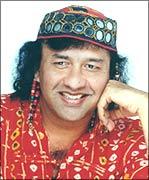
It seems India's version of the pop idol TV craze is getting some interesting results.
Indian songwriter and producer Anu Malik talks about Indian Idol
"When Indian Idol 2 started, I believed we would have a female idol this time. Unfortunately, that didn't happen and it is really funny. Women are ruling in every sector, so why not in music? It's all about the audience. How can Monali, Meenal, Neha or Antara not get astounding votes? Strangely, somewhere down the line, we still feel boys should be given first preference." Read the rest of his interview at Rediff.com.
Tuesday, April 18, 2006
Ambrozijn - new world music from Belgium
 Ambrozijn, the Belgian trio of Tom Theuns, Wim Claeys, and Wouter Vandenabeele, rejoin their now customary producer Gabriel Yacoub for their fifth recording, Krakalin. It is an oddly varied musical experience. The instrumental prowess is immediately evident and compelling, but the choice of material can be difficult, even deliberately disturbing as in "Kuifje in Bergom." Theuns' vocals demand acclimatization from the listener, and his lyrics are even more difficult to conveniently categorize. And Ambrozijn challenges expectation in an even more subversive fashion, by essaying popular French styles of the recent past as in "l'Avion" and "Sur la Rive Gauche," avoiding tackiness and imbuing them with sympathetic resonance...
 Read More and listen to a full song form the CD
Friday, April 14, 2006
A world of music, preserved at the LOC
2005 entries in the Library of Congress's National Recording Registry
Full details and listings at the LOC
Here's a sampling of the 50 recordings chosen for special recognition and preservation
(in chronological order)
1. "Canzone del Porter" from "Martha (von Flotow)," Edouard de Reszke (1903)
6. "Ory's Creole Trombone," Kid Ory (June 1922)
8. "Tanec pid werbamy/Dance Under the Willows," Pawlo Huemiuk (1926)
10. First official transatlantic telephone conversation (Jan. 7, 1927)
11. "El Manisero" ("The Peanut Vendor"), Rita Montaner, vocal with orchestra
(1927); "El Manisero," Don Azpiazu and his orchestra (1930)
15. "Wabash Cannonball," Roy Acuff (1936)
20. "John the Revelator," Golden Gate Quartet (1938)
25. "Jole Blon," Harry Choates (1946)
28. "Anthology of American Folk Music," edited by Harry Smith (1952)
33. "Whole Lotta Shakin' Goin' On," Jerry Lee Lewis (1957)
35. "Poeme Electronique," Edgard Varese (1958)
36. "Time Out," The Dave Brubeck Quartet (1959)
37. Studs Terkel interview with James Baldwin (Sept. 29, 1962)
41. "Are You Experienced?" Jimi Hendrix Exerience (1967)
42. "We're Only in It for the Money," Frank Zappa and the Mothers of Invention (1968)
45. "Don't Crush That Dwarf, Hand Me the Pliers," Firesign Theatre (1970)
46. "The Revolution Will Not Be Televised," Gil Scott-Heron (1970)
47. "Will the Circle Be Unbroken," Nitty Gritty Dirt Band (1972)
48. The old fog horn, Kewaunee, Wis., recorded by James A. Lipsky (1972)
Full details and listings at the LOC
Here's a sampling of the 50 recordings chosen for special recognition and preservation
(in chronological order)
1. "Canzone del Porter" from "Martha (von Flotow)," Edouard de Reszke (1903)
6. "Ory's Creole Trombone," Kid Ory (June 1922)
8. "Tanec pid werbamy/Dance Under the Willows," Pawlo Huemiuk (1926)
10. First official transatlantic telephone conversation (Jan. 7, 1927)
11. "El Manisero" ("The Peanut Vendor"), Rita Montaner, vocal with orchestra
(1927); "El Manisero," Don Azpiazu and his orchestra (1930)
15. "Wabash Cannonball," Roy Acuff (1936)
20. "John the Revelator," Golden Gate Quartet (1938)
25. "Jole Blon," Harry Choates (1946)
28. "Anthology of American Folk Music," edited by Harry Smith (1952)
33. "Whole Lotta Shakin' Goin' On," Jerry Lee Lewis (1957)
35. "Poeme Electronique," Edgard Varese (1958)
36. "Time Out," The Dave Brubeck Quartet (1959)
37. Studs Terkel interview with James Baldwin (Sept. 29, 1962)
41. "Are You Experienced?" Jimi Hendrix Exerience (1967)
42. "We're Only in It for the Money," Frank Zappa and the Mothers of Invention (1968)
45. "Don't Crush That Dwarf, Hand Me the Pliers," Firesign Theatre (1970)
46. "The Revolution Will Not Be Televised," Gil Scott-Heron (1970)
47. "Will the Circle Be Unbroken," Nitty Gritty Dirt Band (1972)
48. The old fog horn, Kewaunee, Wis., recorded by James A. Lipsky (1972)
From Cuba to Africa and back
...world music crossing the Atlantic
Africa's influence on New World music is hardly news, but beginning in the 1930s, in the throes of global economic crisis, the Gramophone and Victor companies began to repackage their Latin American catalogues with Ghana, Nigeria and the Congo region in their sights, marketed as the GV Series. Powerful radio transmitters broadcast the music to keen West African audiences, and local performers began to incorporate Cuban elements into their repertoire. The spread of the phonograph and the increased availability of affordable musical instruments, especially following World War II, only enhanced the popularity of Cuban dance music, and the rest is history.
Michael Stone listens to some interesting new releases:
Out Of Cuba: Latin American Music Takes Africa By Storm, Los Afro-Salseros de Senegal and Kekele from Cuba to Africa and back.
Africa's influence on New World music is hardly news, but beginning in the 1930s, in the throes of global economic crisis, the Gramophone and Victor companies began to repackage their Latin American catalogues with Ghana, Nigeria and the Congo region in their sights, marketed as the GV Series. Powerful radio transmitters broadcast the music to keen West African audiences, and local performers began to incorporate Cuban elements into their repertoire. The spread of the phonograph and the increased availability of affordable musical instruments, especially following World War II, only enhanced the popularity of Cuban dance music, and the rest is history.
Michael Stone listens to some interesting new releases:
Out Of Cuba: Latin American Music Takes Africa By Storm, Los Afro-Salseros de Senegal and Kekele from Cuba to Africa and back.
Tuesday, April 11, 2006
BBC World Music Awards - 2006
The annual awards for world music, presented by the BBC, were announced this week. Not, in my opinion, the most challenging collection of music imaginable, but it's always nice to see a new (really) Ry record get some recognition after years of him sitting in the background strumming. - cliff
# Ry Cooder (USA): Americas
# Souad Massi (Algeria): Middle East/North Africa
# Amadou & Mariam (Mali): Africa
# Fanfare Ciocarlia (Romania): Europe
# Sain Zahoor (Pakistan): Asia/Pacific
# DJ Shantel (Ukraine/Germany): Club Global
# Nitin Sawhney (India/UK): Culture Crossing
# Konono No 1 (Congo): Newcomer
# Amadou & Mariam (Mali): Album of the Year
More info about the awards, and audio of the performers' music, is available online:
www.bbc.co.uk/radio3/worldmusic
# Ry Cooder (USA): Americas
# Souad Massi (Algeria): Middle East/North Africa
# Amadou & Mariam (Mali): Africa
# Fanfare Ciocarlia (Romania): Europe
# Sain Zahoor (Pakistan): Asia/Pacific
# DJ Shantel (Ukraine/Germany): Club Global
# Nitin Sawhney (India/UK): Culture Crossing
# Konono No 1 (Congo): Newcomer
# Amadou & Mariam (Mali): Album of the Year
More info about the awards, and audio of the performers' music, is available online:
www.bbc.co.uk/radio3/worldmusic
Subscribe to:
Posts (Atom)