
For those who have kept up with the Buda Musique series, the otherworldly novelty of the earliest volumes released in the late 1990's has perhaps worn off. But they have also been rewarded with everything from solo pianists, King David's Harpists, historic recordings of orchestras as well as classic, 1970's-era Ethiopian soul as interpreted by Cambridge, Massachusetts' Either/Orchestra live in Addis Ababa... The latest in the series, Ethiopiques 24, is devoted to the funkier side of 1970's Ethiopia. Stars of earlier volumes, such as Seylou Yohannes and Ayalew Mesfin, appear here and the music, as always, is spectacular. Wubshet Fisseha and the Exception Five Band's lone track, "Sew Endayhon Yelellem," mixes a horn line that could come from nowhere but the landlocked East African nation with scratchy guitars, one of which takes a brutally raw solo midway through. Tamrat Molla and the Venus Band's "Ber anbar Sebelewo" steals quietly in before erupting in celebratory handclaps so typical of Ethiopian and Tigray music. Behind it all are the usual assortment of cheap organs, jubilant horn charts and choked guitar and bass licks...
Read More and Listen in RootsWorld
Friday, March 26, 2010


Thursday, March 25, 2010
Music from the heart of the Batonga
Like those 70s-era Electra/Nonesuch LPs, Africa: Shona Mbira Music and Music of the Shona People, The Kankobela of the Batonga Vol. 1 features music played on the kankobela (commonly referred to as the thumb piano), and like those records, the music contained here is a thing of lullabye-like guilelessness. In fact, this disc can be seen as the long-awaited companion to the recordings South African ethnomusicologist Hugh Tracey made of the same music between 1952 and 1957. Those recordings have been reissued, along with another 20 discs worth of Tracey's material, as Kalimba and Kalumbu Songs by SWP.
The music here was recorded in 1996 and 2008 by label owner Michael Baird. Baird, who is Zambian-born, traveled to the region his birth country shares with Zimbabwe, the Zambezi valley, an area dominated by the finger-shaped Lake Kariba, in order to see what was left of the type of music he heard on those Tracey recordings half a century ago. And while the musical results are wonderful, the reality on the ground is depressing. About a decade after Tracey's initial visit, the Zambezi river was damned, making the lake and pushing the Batonga people away from what had been fertile ground. Several decades of displacement have not only taken their toll on these people's quality of life, it has caused the younger generations to turn away from the traditions, because, as far as the generations who've come of age since the lake was formed are concerned, those traditions now represent failure.
Read more and listen on RootsWorld
The music here was recorded in 1996 and 2008 by label owner Michael Baird. Baird, who is Zambian-born, traveled to the region his birth country shares with Zimbabwe, the Zambezi valley, an area dominated by the finger-shaped Lake Kariba, in order to see what was left of the type of music he heard on those Tracey recordings half a century ago. And while the musical results are wonderful, the reality on the ground is depressing. About a decade after Tracey's initial visit, the Zambezi river was damned, making the lake and pushing the Batonga people away from what had been fertile ground. Several decades of displacement have not only taken their toll on these people's quality of life, it has caused the younger generations to turn away from the traditions, because, as far as the generations who've come of age since the lake was formed are concerned, those traditions now represent failure.
Read more and listen on RootsWorld
Friday, March 12, 2010
Mariem Hassan's 'the thorn' expands the Saharan 'blues' tradition
 Saharaui singer Mariem Hassan releases her new CD this month, in collaboration with with the poet Lamin Allal and the guitarist, Lamgaifri Brahim. A highlight of the CD is the innovative title track “Shouka,” a cantata developed by using all scales and rhythms of the traditional vocal style, the haul.
 A full review will be coming in RootsWorld soon.
Listen!
More audio and Biography of the artist at cdRoots
Thursday, March 04, 2010
Omar Sosa's latest Ceremony: a big band exploration
 Think what you may of the Grammys, but the Academy got one thing (partially) right this past year: Omar Sosa's 2009 recording Across the Divide: A Tale of Rhythm & Ancestry was nominated for Best Contemporary World Music Album. While Béla Fleck took home the statue, the nomination introduced many people to the music of Omar Sosa. For these new listeners, this is good timing. The most recent release by Omar Sosa, Ceremony, shows off his deep "world" credentials. Sosa, originally from Cuba, teamed up with Germany's NDR Bigband and Brazilian arranger Jaques Morelenbaum, and the result is a powerful recording of celebration and joy.
Read More and Hear a Song
Buy the CD
See more reviews of World Music on RootsWorld
Friday, February 19, 2010
Czech New Yorker gives a new spin on Latin music

Marta Topferova
Trova
World Village (www.worldvillagemusic.com)
I had to pull out her previous discs for some comparing and contrasting in order to be sure, and now I am: Marta Topferova has got her groove back. After her impressive 2005 debut La Marea, this young Czech woman who makes Latin music went a trifle soft, though still charming, with the next year's follow-up Flor Noctura. Now on Trova, a title presumably inspired by the rural Cuban style of the same name, she tops them both, trotting out a release that's got spunk, sensuality and, above all, authenticity to spare. The rumbling rhythm of the opening "Juligan" ("Hooligan") wastes no time in giving Topferova's voice some roughness to soften even as that voice has got you suspending more than a little disbelief that the person providing it is from Eastern Europe.
She's learned her lessons well, sounding something like Omara Portuondo one moment and Lila Downs or Mercedes Sosa the next. ("La Pradera" and "Madrugada" even put me in mind of the recently deceased Lhasa de Sela.) So is she merely seeking to imitate whatever Latin divas seem to strike her fancy? Not to my ears. Sounds to me like Topferova's absorbed a love for Latin music and seeks to pay tribute to it in the best way possible, not only in her breathy, precise vocal tones but also her playing of the four-string cuatro that guides the accompanying musicians (on tres, accordion, violin, bass and percussion) through songs recorded in the Czech Republic and touching down in Cuba, Brazil, Venezuela, Colombia and elsewhere in the lower regions of the West. I'd recommend her other two, but this is truly the Marta Topferova album to get, particularly if you haven't heard her before. - Tom Orr
CD and audio samples at cdRoots
Wednesday, February 10, 2010
Panama! - Calypso, Guajira Jazz & Cumbia Típica on the Isthmus
Various Artists
Panama! 3: Calypso Panameño, Guajira Jazz & Cumbia Típica on the Isthmus 1960-75
Soundway Records

The narrow waist of the Americas (as Pablo Neruda once put it) was a major transshipment point between the Atlantic and Pacific long before the Panama Canal's construction claimed the lives of thousands of black English-speaking Caribbean immigrant laborers in the early twentieth century. The presence of U.S. military forces and contractors, overseas radio broadcasting, international touring bands, imported recordings, foreign films, the constant migratory flow, and local ethnic and linguistic diversity made for a unique and vibrant popular music culture.
While much music has gone undocumented, plenty more mid-twentieth-century vinyl has been lost to tropical moisture, mold, dust, needle wear, neglect, technological change, and heedless discard. Of course, as an endless tsunami of shoddy reissues from Cuba to West Africa painfully confirms, any sham can stroll into a developing country recording vault and slap together a gushing, half-witted compilation destined rapidly to disappear into the second-hand dustbins.
A stellar exception is Soundway Records, which recently issued its third Panamanian volume from the 1960s and '70s, a reminder that this global crossroads has long nourished a vibrant musical culture in a society that, while open to all and sundry, sustains a unique sonic legacy. Hence, researcher Roberto Ernesto Gyemant's dogged dedication to salvaging and documenting the extraordinary Panamanian sounds of the period is all the more revelatory. This CD set reveals the dynamic character and openness to influences far and wide that give Panamanian popular music its distinctive character. The traces are all here, from Afro-Cuban folklore, Latin jazz, calypso, and cumbia, to North American jazz, funk, blues, and soul.
Something of the jubilant character of the music also inheres in the band names: Sir Jablonsky, Los Silvertones, Los Exagerados, Bush y Sus Magnificos (no relation to the disgraced U.S. political dynasty), Exciters, Freddy y Sus Afro Latinos, Lord Cobra and Pana-Afro-Sounds, Los Dinamicos, Papi Brandao y Sus Ejecutivos, The Soul Fantastics, Tamborito Swing, Los Mozambiques, and Los Revolucionarios, among many others.
On Volume 3, Cuban composer Guillermo Rodríguez Fiffe's familiar "Bilongo" is a swaying descarga with a tinny cumbia guitar by Papi Brandao y Sus Ejecutivos. Also in an Afro-Colombian vein, "El pajaro Zum-Zum" presents the accordion strains commonly associated with Panama's southern neighbor, a reminder that the country was a province of Colombia before the United States intervened to secure control of the terrain that yielded the Panama Canal. On "Moving-Grooving," Little Francisco Greaves conjures up the hovering spirit of James Brown, on a pounding rock-solid drums 'n' bass, handclap-grunt-and-scream foundation worthy of the Godfather of Soul. By the Silvertones, "Up Tight" is romping echo-chamber Latin boogaloo and soul with a dash of Gershwin (a la "Summertime") and a hint of Beny Moré-they don't make them like this anymore. Extending that now-rare groove, Orquesta Los Embajadores serves up "Shingalin en Panamá," 1967 Latin shing-a-ling like it was never heard in Spanish Harlem. Ralph Weeks and the Telecasters rework the Roger Graham-Don Peyton-Spencer Williams chestnut "I Ain't Got Nobody" (which received any number of boogaloo treatments in 1960s New York) into a descarga cum guajira titled, naturally, "Gua-Jazz." "Masters Are Gone," by Sir Valentino con Combo Esclavos Alegres ("The Happy Slaves Combo," ironically named), is a haunting minor-key string-band calypso with a hint of reggae and a shout out to Martin Luther King-an anthem of black cultural endurance.
In "Chombo pa' la tienda," by Soul Apollo and Frederick Clarke, the stereotypical chombo figure (local slang for black immigrant laborers from the English-speaking Caribbean) is sent to the store with his ill-tempered mother's call-and-response shopping list, enumerated in rapid-fire English patois, faithfully repeated to the Chinese shopkeeper in street Spanish. Back home, the black-humorous climax comes when Chombo attempts to withhold the change from his tipsy mother with a diversionary tale about how the boys on the street all ridicule her abusive alcoholic ways. Panama! 3 offers all this and more, in the unsentimental spirit of a place where, if nothing comes easy, nothing escapes the ribald optimism reflected in this sizzling (and superbly documented) slice of Panamanian cultural history.
Fittingly, compiler Gyemant dedicates Volume 3's 23 gritty nuggets to Lord Cobra (a.k.a. Wilfred Berry). With his Sugar Tone Band, "Partido Calpysonian" issues a triumphant challenge to Trinidad's calypso king Sparrow, wherein to no one's surprise, Lord Cobra ascends to rule, and Colón, Panamá emerges as the epicenter of the good-time universe. A rare discovery and revivalist's labor of love, these titles showcase Panama's once again brand-new bag, vital music from a bygone (but thankfully unforgotten) era. It just took a while for the rest of us to get the news. - Michael Stone
CD available from cdRoots
Panama! 3: Calypso Panameño, Guajira Jazz & Cumbia Típica on the Isthmus 1960-75
Soundway Records
The narrow waist of the Americas (as Pablo Neruda once put it) was a major transshipment point between the Atlantic and Pacific long before the Panama Canal's construction claimed the lives of thousands of black English-speaking Caribbean immigrant laborers in the early twentieth century. The presence of U.S. military forces and contractors, overseas radio broadcasting, international touring bands, imported recordings, foreign films, the constant migratory flow, and local ethnic and linguistic diversity made for a unique and vibrant popular music culture.
While much music has gone undocumented, plenty more mid-twentieth-century vinyl has been lost to tropical moisture, mold, dust, needle wear, neglect, technological change, and heedless discard. Of course, as an endless tsunami of shoddy reissues from Cuba to West Africa painfully confirms, any sham can stroll into a developing country recording vault and slap together a gushing, half-witted compilation destined rapidly to disappear into the second-hand dustbins.
A stellar exception is Soundway Records, which recently issued its third Panamanian volume from the 1960s and '70s, a reminder that this global crossroads has long nourished a vibrant musical culture in a society that, while open to all and sundry, sustains a unique sonic legacy. Hence, researcher Roberto Ernesto Gyemant's dogged dedication to salvaging and documenting the extraordinary Panamanian sounds of the period is all the more revelatory. This CD set reveals the dynamic character and openness to influences far and wide that give Panamanian popular music its distinctive character. The traces are all here, from Afro-Cuban folklore, Latin jazz, calypso, and cumbia, to North American jazz, funk, blues, and soul.
Something of the jubilant character of the music also inheres in the band names: Sir Jablonsky, Los Silvertones, Los Exagerados, Bush y Sus Magnificos (no relation to the disgraced U.S. political dynasty), Exciters, Freddy y Sus Afro Latinos, Lord Cobra and Pana-Afro-Sounds, Los Dinamicos, Papi Brandao y Sus Ejecutivos, The Soul Fantastics, Tamborito Swing, Los Mozambiques, and Los Revolucionarios, among many others.
On Volume 3, Cuban composer Guillermo Rodríguez Fiffe's familiar "Bilongo" is a swaying descarga with a tinny cumbia guitar by Papi Brandao y Sus Ejecutivos. Also in an Afro-Colombian vein, "El pajaro Zum-Zum" presents the accordion strains commonly associated with Panama's southern neighbor, a reminder that the country was a province of Colombia before the United States intervened to secure control of the terrain that yielded the Panama Canal. On "Moving-Grooving," Little Francisco Greaves conjures up the hovering spirit of James Brown, on a pounding rock-solid drums 'n' bass, handclap-grunt-and-scream foundation worthy of the Godfather of Soul. By the Silvertones, "Up Tight" is romping echo-chamber Latin boogaloo and soul with a dash of Gershwin (a la "Summertime") and a hint of Beny Moré-they don't make them like this anymore. Extending that now-rare groove, Orquesta Los Embajadores serves up "Shingalin en Panamá," 1967 Latin shing-a-ling like it was never heard in Spanish Harlem. Ralph Weeks and the Telecasters rework the Roger Graham-Don Peyton-Spencer Williams chestnut "I Ain't Got Nobody" (which received any number of boogaloo treatments in 1960s New York) into a descarga cum guajira titled, naturally, "Gua-Jazz." "Masters Are Gone," by Sir Valentino con Combo Esclavos Alegres ("The Happy Slaves Combo," ironically named), is a haunting minor-key string-band calypso with a hint of reggae and a shout out to Martin Luther King-an anthem of black cultural endurance.
In "Chombo pa' la tienda," by Soul Apollo and Frederick Clarke, the stereotypical chombo figure (local slang for black immigrant laborers from the English-speaking Caribbean) is sent to the store with his ill-tempered mother's call-and-response shopping list, enumerated in rapid-fire English patois, faithfully repeated to the Chinese shopkeeper in street Spanish. Back home, the black-humorous climax comes when Chombo attempts to withhold the change from his tipsy mother with a diversionary tale about how the boys on the street all ridicule her abusive alcoholic ways. Panama! 3 offers all this and more, in the unsentimental spirit of a place where, if nothing comes easy, nothing escapes the ribald optimism reflected in this sizzling (and superbly documented) slice of Panamanian cultural history.
Fittingly, compiler Gyemant dedicates Volume 3's 23 gritty nuggets to Lord Cobra (a.k.a. Wilfred Berry). With his Sugar Tone Band, "Partido Calpysonian" issues a triumphant challenge to Trinidad's calypso king Sparrow, wherein to no one's surprise, Lord Cobra ascends to rule, and Colón, Panamá emerges as the epicenter of the good-time universe. A rare discovery and revivalist's labor of love, these titles showcase Panama's once again brand-new bag, vital music from a bygone (but thankfully unforgotten) era. It just took a while for the rest of us to get the news. - Michael Stone
CD available from cdRoots
Thursday, January 07, 2010
Helping African artists 'crowdfund' recordings
New website helps unsigned African artists “crowdfund” music recordings
PRESS RELEASE
www.AfricaUnsigned.com launches an alternative way of producing African music. Unsigned artists record their music, funded by fans.
A selection of up and coming artists from Kenya, Senegal, Mali, Zimbabwe and South Africa were hand picked by a music panel consisting of music experts like Baaba Maal, Tony Allen, and Damon Albarn (Gorillaz, Blur). Music fans from all over the world listen to the selection of artists, pick their favorite(s) and chip in a minimum of $1 dollar to the recording of a professional EP. The music is then distributed to the fans who backed the artist and sold on all major online stores (incl. Amazon & iTunes). All the generated net income from music sales is shared equally between the artists and the music fans who supported the artist.
The website is a joint initiative by producers, artists, music promoters and managers based in West, East and South Africa, who believe in the future of African music. The website aims to unlock the underexposed source of African music talent to the world. The music panel selected a blend of traditional styles and New African Sounds. A new movement of talented African musicians and a a global team of passionate music promoters hope to create a new chapter in the rich musical history of Africa. Go see for yourself at www.africaunsigned.com.
PRESS RELEASE
www.AfricaUnsigned.com launches an alternative way of producing African music. Unsigned artists record their music, funded by fans.
A selection of up and coming artists from Kenya, Senegal, Mali, Zimbabwe and South Africa were hand picked by a music panel consisting of music experts like Baaba Maal, Tony Allen, and Damon Albarn (Gorillaz, Blur). Music fans from all over the world listen to the selection of artists, pick their favorite(s) and chip in a minimum of $1 dollar to the recording of a professional EP. The music is then distributed to the fans who backed the artist and sold on all major online stores (incl. Amazon & iTunes). All the generated net income from music sales is shared equally between the artists and the music fans who supported the artist.
The website is a joint initiative by producers, artists, music promoters and managers based in West, East and South Africa, who believe in the future of African music. The website aims to unlock the underexposed source of African music talent to the world. The music panel selected a blend of traditional styles and New African Sounds. A new movement of talented African musicians and a a global team of passionate music promoters hope to create a new chapter in the rich musical history of Africa. Go see for yourself at www.africaunsigned.com.
Monday, January 04, 2010
Lhasa de Sela passed away in her Montreal home, January 1st 2010
From an e-mail from Lhasa de Sela's manager, David-Etienne Savoie
In Montreal, Canada: Sunday January 3rd, 2010
The singer Lhasa de Sela passed away in her Montreal home on the night of January 1st 2010, just before midnight.
She succumbed to breast cancer after a twenty-one month long struggle, which she faced with courage and determination. Throughout this difficult period, she continued to touch the lives of those around her with her characteristic grace, beauty and humor. The strength of her will carried her once again into the recording studio, where she completed her latest album, followed by successful record launches in Montreal at the Théatre Corona and in Paris at the Théatre des Bouffes du Nord. Two concerts in Iceland in May were to be her last.
She was forced to cancel a long international tour scheduled for autumn 2009. A projected album of the songs of Victor Jara and Violeta Parra would also remain unrealized.
Lhasa de Sela was born on September 27, 1972, in Big Indian, New York. Lhasa's unusual childhood was marked by long periods of nomadic wandering through Mexico and the U.S., with her parents and sisters in the school bus which was their home. During this period the children improvised, both theatrically and musically, performing for their parents on a nightly basis. Lhasa grew up in a world imbued with artistic discovery, far from conventional culture.
Later Lhasa became the exceptional artist that the entire world discovered in 1997 with La Llorona, followed by 2003's The Living Road, and 2009's self-titled LHASA.
These three albums have sold over a million copies world-wide.
It is difficult to describe her unique voice and stage presence, which earned her iconic status in many countries throughout the world, but some Journalists have described it as passionate, sensual, untameable, tender, profound, troubling, enchanting, hypnotic, hushed, powerful, intense, a voice for all time.
Lhasa had a unique way of communicating with her public. She dared to open her heart on stage, allowing her audience to experience an intimate connection and communion with her. She profoundly affected and inspired many people throughout the cities and countries she visited.
An old friend of Lhasa's, Jules Beckman, offered these words:
"We have always heard something ancestral coming through her. She has always spoken from the threshold between the worlds, outside of time. She has always sung of human tragedy and triumph, estrangement and seeking with a Witness's wisdom. She has placed her life at the feet of the Unseen."
Lhasa leaves behind her partner Ryan, her parents Alejandro and Alexandra, her step-mother Marybeth, her 9 brothers and sisters (Gabriela, Samantha, Ayin, Sky, Miriam, Alex, Ben, Mischa and Eden), her 16 nieces and nephews, her cat Isaan, and countless friends, musicians, and colleagues who have accompanied her throughout her career, not to mention her innumerable admirers throughout the world.
Her family and close friends were able to mourn peacefully during the last two days, and greatly appreciated this meaningful period of quiet intimacy. Funeral and services will be held privately.
It has snowed more than 40 hours in Montreal since Lhasa's departure.
David-Etienne Savoie, Lhasaʼs manager
david@lhasadesela.com
On behalf of family and friends
* We will not be giving any interviews but we will be very happy to receive your emails and testimonies
An older interview with the artist
Listen
In Montreal, Canada: Sunday January 3rd, 2010
The singer Lhasa de Sela passed away in her Montreal home on the night of January 1st 2010, just before midnight.
She succumbed to breast cancer after a twenty-one month long struggle, which she faced with courage and determination. Throughout this difficult period, she continued to touch the lives of those around her with her characteristic grace, beauty and humor. The strength of her will carried her once again into the recording studio, where she completed her latest album, followed by successful record launches in Montreal at the Théatre Corona and in Paris at the Théatre des Bouffes du Nord. Two concerts in Iceland in May were to be her last.
She was forced to cancel a long international tour scheduled for autumn 2009. A projected album of the songs of Victor Jara and Violeta Parra would also remain unrealized.
Lhasa de Sela was born on September 27, 1972, in Big Indian, New York. Lhasa's unusual childhood was marked by long periods of nomadic wandering through Mexico and the U.S., with her parents and sisters in the school bus which was their home. During this period the children improvised, both theatrically and musically, performing for their parents on a nightly basis. Lhasa grew up in a world imbued with artistic discovery, far from conventional culture.
Later Lhasa became the exceptional artist that the entire world discovered in 1997 with La Llorona, followed by 2003's The Living Road, and 2009's self-titled LHASA.
These three albums have sold over a million copies world-wide.
It is difficult to describe her unique voice and stage presence, which earned her iconic status in many countries throughout the world, but some Journalists have described it as passionate, sensual, untameable, tender, profound, troubling, enchanting, hypnotic, hushed, powerful, intense, a voice for all time.
Lhasa had a unique way of communicating with her public. She dared to open her heart on stage, allowing her audience to experience an intimate connection and communion with her. She profoundly affected and inspired many people throughout the cities and countries she visited.
An old friend of Lhasa's, Jules Beckman, offered these words:
"We have always heard something ancestral coming through her. She has always spoken from the threshold between the worlds, outside of time. She has always sung of human tragedy and triumph, estrangement and seeking with a Witness's wisdom. She has placed her life at the feet of the Unseen."
Lhasa leaves behind her partner Ryan, her parents Alejandro and Alexandra, her step-mother Marybeth, her 9 brothers and sisters (Gabriela, Samantha, Ayin, Sky, Miriam, Alex, Ben, Mischa and Eden), her 16 nieces and nephews, her cat Isaan, and countless friends, musicians, and colleagues who have accompanied her throughout her career, not to mention her innumerable admirers throughout the world.
Her family and close friends were able to mourn peacefully during the last two days, and greatly appreciated this meaningful period of quiet intimacy. Funeral and services will be held privately.
It has snowed more than 40 hours in Montreal since Lhasa's departure.
David-Etienne Savoie, Lhasaʼs manager
david@lhasadesela.com
On behalf of family and friends
* We will not be giving any interviews but we will be very happy to receive your emails and testimonies
An older interview with the artist
Listen
Thursday, December 10, 2009
John Storm Roberts - gone now, but his impact carries on
The pithy, witty and acerbic John Storm Roberts has passed on. He died on November 29, but I just read about it in the NY Times today.
His 1972 book, Black Music of Two Worlds, was essential reading for anyone into the connections between Africa and the Americas, in jazz, blues, folk and what is now the ubiquitous 'world music'. His retail company and record label, Original Music (which folded many years ago) was a sacred place for me, and I made the pilgrimage a number of times, as well as writing many checks to his mail order address. His choices were impeccable and his taste was wide-ranging and often surprising.
I had many a long and winding conversation with him, usually on the phone, and usually with my finally fading from exhaustion as I tried to keep up with his knowledge, his crankiness and his sense of humor. I miss those the most.
cliff furnald
His 1972 book, Black Music of Two Worlds, was essential reading for anyone into the connections between Africa and the Americas, in jazz, blues, folk and what is now the ubiquitous 'world music'. His retail company and record label, Original Music (which folded many years ago) was a sacred place for me, and I made the pilgrimage a number of times, as well as writing many checks to his mail order address. His choices were impeccable and his taste was wide-ranging and often surprising.
I had many a long and winding conversation with him, usually on the phone, and usually with my finally fading from exhaustion as I tried to keep up with his knowledge, his crankiness and his sense of humor. I miss those the most.
cliff furnald
Wednesday, December 09, 2009
Fin Alfred Larsen: A Life In Danish Music
 "These are the songs folk use for fun, to have a laugh at their own problems. There are horrifying stories like "That's Capitalism For You" or the song about Bombardine who has a child out of wedlock. We know they are real tales of misery but they are told in a humourous way, so we can laugh at ourselves. That's OK, but you have to show solidarity with the people you are singing with, you mustn't sing anything you can't sing from the heart. You mustn't sing down, so to speak, because that's when it becomes hollow. To say 'Now I'll sing you one of the kind of songs you like hear…' - that's no good. Then you're cheating people. But you have to take the temperature"
Morten Alfred Høirup brings us another Danish adventure, but this one is a little closer to home and a lot more personal. Morten talks with his father, Danish folk singer and musician Fin Alfred Larsen
Read more
Saturday, December 05, 2009
The 24th Annual fRoots Critics Poll
The 24th Annual fRoots Critics Poll
New Albums Of 2009 winners
1. Staff Benda Bilili - Très Très Fort (Crammed)
2. Bassekou Kouyate & Ngoni Ba - I Speak Fula (OutHere)
3. Oumou Sangare - Seya (World Circuit)
4. Martin Simpson - True Stories (Topic)
5. The Unthanks - Here’s The Tender Coming (EMI/Rabble Rouser)
6. Justin Adams & Juldeh Camara - Tell No Lies (Real World)
7. Tinariwen - Imidiwan (Independiente)
8. Jackie Oates - Hyperboreans (Unearthed/One Little Indian)
9. Khaled - Liberté (Wrasse)
10. Spiro - Lightbox (Real World)
1. Various - Three Score & Ten: A Voice To The People (Stern’s)
2. Franco & Le TPOK Jazz - Francophonic Vol. 2 (Stern’s)
3. Various - Panama! 2 (Soundway)
4. Various - Legends Of Benin (Analog Africa)
5. Chris Wood - Albion (RUF)
6. Woody Guthrie - My Dusty Road (Rounder)
Read more about the poll and get to know fRoots better!
You can fiud many of these recordings at cdRoots and Amazon.com
New Albums Of 2009 winners
1. Staff Benda Bilili - Très Très Fort (Crammed)
2. Bassekou Kouyate & Ngoni Ba - I Speak Fula (OutHere)
3. Oumou Sangare - Seya (World Circuit)
4. Martin Simpson - True Stories (Topic)
5. The Unthanks - Here’s The Tender Coming (EMI/Rabble Rouser)
6. Justin Adams & Juldeh Camara - Tell No Lies (Real World)
7. Tinariwen - Imidiwan (Independiente)
8. Jackie Oates - Hyperboreans (Unearthed/One Little Indian)
9. Khaled - Liberté (Wrasse)
10. Spiro - Lightbox (Real World)
1. Various - Three Score & Ten: A Voice To The People (Stern’s)
2. Franco & Le TPOK Jazz - Francophonic Vol. 2 (Stern’s)
3. Various - Panama! 2 (Soundway)
4. Various - Legends Of Benin (Analog Africa)
5. Chris Wood - Albion (RUF)
6. Woody Guthrie - My Dusty Road (Rounder)
Read more about the poll and get to know fRoots better!
You can fiud many of these recordings at cdRoots and Amazon.com
Friday, December 04, 2009
Irish folk star Liam Clancy dies
The Irish singer and cultural icon Liam Clancy has died. He was 74.
Liam was the youngest of the four Clancy brothers. He was born in Co Tipperary and emigrated to the US in 1956, where he joined his brothers in singing in the clubs of Greenwich Village. With Tommy Macken, they got on the Ed Sullivan Show in 1961 when they filled in for a guest who failed to show up. From there, it was records with Columbia and hundreds of live performances and created a massive "Irish folk music revolution" in the US.
Liam was the youngest of the four Clancy brothers. He was born in Co Tipperary and emigrated to the US in 1956, where he joined his brothers in singing in the clubs of Greenwich Village. With Tommy Macken, they got on the Ed Sullivan Show in 1961 when they filled in for a guest who failed to show up. From there, it was records with Columbia and hundreds of live performances and created a massive "Irish folk music revolution" in the US.
Tuesday, November 24, 2009
Tinariwen: Tuareg guitar band returns to the roots

It's safe to say that renowned Tuareg guitar band Tinariwen have arrived. After a string of acclaimed recordings, they offer us Imidiwan:Companions, recorded in a temporary studio in the Saharan oasis village of Tessalit and some of the surrounding wilderness. It has the same brooding power while recalling the best aspects of what gave Tinariwen's first album the spontaneous feel of a field recording at times, resulting in disc that sounds like the creative juices were simply allowed to flow and captured in the best way possible.
Read More in RootsWorld
Wednesday, November 18, 2009
Fotefar and Håvard Lund: skewed visions of Nordic music

Fotefar & Håvard Lund are Swedes who take a skewed view of their traditional music on their recording, Fest. They do loopy things with the rhythms, crash sonorities up against one another, and splatter timbres up against a wall with Pollock-esque abandon. They'll pull you into a tune thinking it's going to be all traditional and sedate, then they'll twist the harmony up into something unrecognizable. Lena Jinnegren's matter-of-fact vocals have an off-handed air about them that says, "Join this party or don't. We're going to keep playing either way."
Read more and hear the music in RootsWorld now.
Trio Ifriqiya: jazz from France, Congo, Algeria
 Trio Ifriqiya comprises the compelling talents of Fayçal El Mezouar (vocals, violin, oud, percussion, trained at Algeria's El Kordobia conservatory), French jazz pianist-composer Didier Fréboeuf, and Congolese drummer-percussionist Emile Biayenda (a founding member of Les Tambours de Brazza). Inspired by the traditions of the Maghreb, yet invested with a collective improvisatory genius that blends lyrical traces from four continents, they craft a music that defies easy categorization on their CD, Petite Planète.
Read more and hear the music in RootsWorld now!
Friday, October 09, 2009
Cape Verdean singer Lura: intimacy and warmth
Lura
Eclipse
I saw Lura onstage for the first time when she was touring in support of her second album M'bem di Flora. My concert-going companion and I agreed that Lura's live performance had a magic that her studio recordings, good though they were, lacked. To me it was the almost entirely acoustic sound of her ensemble that accounted for the warmth, along with the fact of having the barefoot, utterly entrancing Lura there in person. Eclipse, the Portuguese-born Cape Verdean singer's latest, comes closest to capturing the intimacy she radiates live as well as being her most accomplished and varied work to date...
Read the complete review in RootsWorld
Eclipse
I saw Lura onstage for the first time when she was touring in support of her second album M'bem di Flora. My concert-going companion and I agreed that Lura's live performance had a magic that her studio recordings, good though they were, lacked. To me it was the almost entirely acoustic sound of her ensemble that accounted for the warmth, along with the fact of having the barefoot, utterly entrancing Lura there in person. Eclipse, the Portuguese-born Cape Verdean singer's latest, comes closest to capturing the intimacy she radiates live as well as being her most accomplished and varied work to date...
Read the complete review in RootsWorld
Oysterband singer goes trad:arr:solo
 John Jones, the inimitable lead singer of the Oysterband, launches his first solo outing with the superb album Rising Road. Members of the Oysterband have, over their thirty plus year history, been given the latitude to pursue other projects: guitarist Alan Prosser has released albums under his own name, and longtime drummer Lee Partis recently left to pursue his therapeutic counseling work in prisons. Jones had apparently felt the itch to make his own personal statement, and on Rising Road he is joined by some of the young luminaries of the contemporary U.K. folk scene, including Seth Lakeman and Benji Kirkpatrick, as well as his old friend Alan Prosser and the multi-talented skills of producer and musician Al Scott...
Read More | Listen
Latvia roots and rock with Ilgi
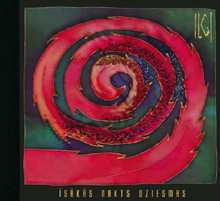 Jāņi is an ancient pagan summer solstice ritual that is observed into the present day in Latvia.So it's a no-brainer that Latvia's premiere folk-rockers Iļģi would put out an album of songs celebrating the rite. Their last few albums have been ritual-themed, using Christmas and marriage as jumping-off points for their explorations of ancient Latvian songs. They get a little crunchier on Īsākās Nakts Dziesmas than in the past, with grinding fiddles, wailing pipes, more assertive drumming, and thrashier guitars. This is not to say that they've lost the ethereal side that made earlier releases so appealing; they've just upped the ante a bit on many tracks...
Read More
Friday, September 11, 2009
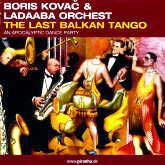
Boris Kovac and The LaDaABa Orchest
The Last Balkan Tango
September 14, 2001:
What do you say about music or art at these times? Strangely, just a few weeks ago, this recording came in and sat on my desk, awaiting my response. Last week I found myself listening to the mournful, almost plodding opening track, a sound both tearful and weirdly hopeful. These eight minutes of dark despair suddenly burst like a bubble, followed by a frenzied, thirty seconds of dancing, and then with a "Hey!" it's done. The Last Balkan Tango is a soundtrack for the decadence of one world cast against the furor of another; life vs. reality.
Yugoslavian minstrels Boris Kovac and The LaDaABa Orchest, residents of Novi Sad, celebrate life in the ruins, both concrete and psychic. For twelve more searing, lovely, bitter and explosive instrumental tracks, Kovac and company explore the folk roots of tragedy and the complex, modern composition of excess. They ask a simple, fathomless question: "Just imagine there is only one starry night left 'til the end of this world... what would we do?" and then proceed to answer it with the confusion that is this new century. God? Decadence? Hope? Despair? Wait for the random moment to choose for you? Be with those you love or just do a tango with whoever passes by? "Let god come with you, if he's up to it?" These songs pose the questions, ignore the obvious answers, and cut like a knife through the rubble of rhetoric without muttering the words.
That saxophonist Kovac and his orchestra of accordion, bass, percussion, reeds and guitar have spoken to their own situation is a marvel. That it translates so well and so unexpectedly to our own is scary and yet ultimately promising. They drag their exhausted partner across the marble floor. They kick up the dust in an unpaved street. They revel with the revelers at a wedding and mourn the interment of morning. In the final movement of The Last Balkan Tango, they board "The Orient Express" for a tour of the past and the future; a ride through the defiant dances of the Balkans, a tango in the midst of the fall of the old Europe, on a journey to "a better world," possibly this one, probably not. Kovac proves that we humans, in all of our utter oblivion, still manage to move the cosmos with our music, still find hope in our inner spirits, and seek a way out of the morass that might allow everyone else to come with us. He welcomes us into the new millennium, a time that might require us to be fatalistic, but might not have to be fatal. - Cliff Furnald
Wednesday, September 02, 2009
Lura's "Eclipse" is an intimate vision of Cape Verde
Lura
Eclipse
Four Quarters Entertainment (www.fourquartersent.com)
I saw Lura onstage for the first time when she was touring in support of her second album M'bem di Flora. My concert-going companion and I agreed that Lura's live performance had a magic that her studio recordings, good though they were, lacked. To me it was the almost entirely acoustic sound of her ensemble that accounted for the warmth, along with the fact of having the barefoot, utterly entrancing Lura there in person.
Eclipse, the Portuguese-born Cape Verdean singer's latest, comes closest to capturing the intimacy she radiates live as well as being her most accomplished and varied work to date. For every track that treads the melancholic landscape that Cesaria Evora made famous (the title piece and "Terra'L" among them) there's a surprise like the distinct Arabic feel to the opening "Libramor." Shades of Angola and Mozambique cover "Maria," "Na Nha Rubera" sounds like equal parts Cape Verde and Cape Town and the galloping beat of "Tabanka" shows that Lura can sing just as ably against backgrounds not particularly lush. Actually she's in great voice throughout, her tones not merely charming but ever more confident as she makes her way through material that goes further beyond Cape Verde than she's yet gone. Where Lura's first two albums hinted at the arrival of a major new star in Cape Verdean music, Eclipse is that arrival. - Tom Orr
The artist's web site includes a nice selection of full tracks from the CD
CD available from Amazon
Eclipse
Four Quarters Entertainment (www.fourquartersent.com)
I saw Lura onstage for the first time when she was touring in support of her second album M'bem di Flora. My concert-going companion and I agreed that Lura's live performance had a magic that her studio recordings, good though they were, lacked. To me it was the almost entirely acoustic sound of her ensemble that accounted for the warmth, along with the fact of having the barefoot, utterly entrancing Lura there in person.
Eclipse, the Portuguese-born Cape Verdean singer's latest, comes closest to capturing the intimacy she radiates live as well as being her most accomplished and varied work to date. For every track that treads the melancholic landscape that Cesaria Evora made famous (the title piece and "Terra'L" among them) there's a surprise like the distinct Arabic feel to the opening "Libramor." Shades of Angola and Mozambique cover "Maria," "Na Nha Rubera" sounds like equal parts Cape Verde and Cape Town and the galloping beat of "Tabanka" shows that Lura can sing just as ably against backgrounds not particularly lush. Actually she's in great voice throughout, her tones not merely charming but ever more confident as she makes her way through material that goes further beyond Cape Verde than she's yet gone. Where Lura's first two albums hinted at the arrival of a major new star in Cape Verdean music, Eclipse is that arrival. - Tom Orr
The artist's web site includes a nice selection of full tracks from the CD
CD available from Amazon
Subscribe to:
Posts (Atom)